

Trump Loses Control
Iran has escalation dominance - for now anyway

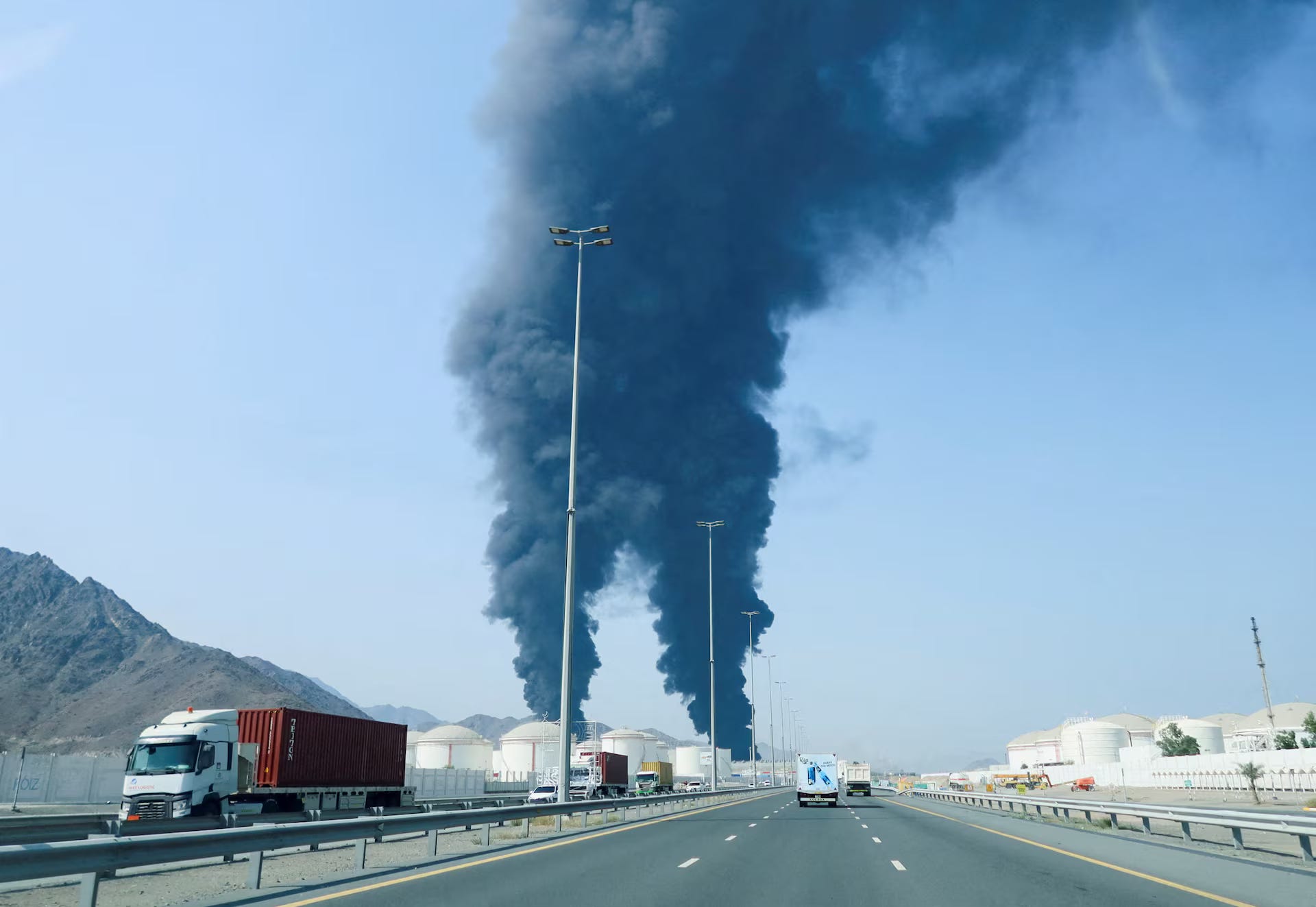
If we didn’t understand it already the last 24 hours have made something painfully clear. Iran is now in the driving seat in this war.
A series of events starting with Israel’s strike on the Pars gas field yesterday afternoon, followed by retaliation strikes on Qatari and Saudi gas and oil installations and a late night social media post from Donald Trump have shown us this.
The president tried to deny he had authorised the strike on Iran’s gas field – something challenged by reliable reporters in the US and Israel – then said ‘no more attacks will be made’ on the Iranian gas field, unless the Islamic Republic continues to hit Qatar’s facilities.
He has therefore left the decision with them. And the signs are that Iran now has what the military call ‘escalation dominance’ because on Thursday morning it went ahead, flexed that muscle, and hit critical Saudi oil facilities on the Kingdom’s Red Sea coast. That was an escalatory move showing they were taking no notice of Trump’s overnight threat. Iran also struck two refineries in Kuwait.
So now, once again, the Islamic Republic’s greater ability to withstand pain leaves them with the choices about where this now goes. The US meanwhile has far fewer choices.
A few days after the war began I blogged about possible end games. I anticipated that Iran might want to continue for longer than the US - and will explore further down what their aims in that might be. But I underpriced the way that they would leverage the world’s need for Gulf energy and how that might stymie both the US and its Gulf allies’ ability to coerce the Islamic Republic.
Now you could argue that Iran’s leveraging of oil and gas in order to set the pace of this conflict was already quite evident. Early in the war, the Trump administration was critical of an Israeli strike on an Iranian oil facility revealing a difference in strategy. And of course Iran’s decision to block the Hormuz Strait to nations it considers hostile also showed their ability to escalate in ways to which the Americans had no answer to – not immediately in any case.
Could something restore that escalation dominance to the US? Many things might still go against Iran – from popular unrest to internal divisions over the management of the war or a decision by the Gulf states to join in the campaign against them. And efforts are underway to move US Marines to the region, possibly as part of a broader effort to reopen Hormuz.
But for the moment it is the Iranians shaping this. And consider the speed with which they reacted to the attack on their gas field yesterday, upping the ante – all of which suggests that not only did the US/Israeli decapitation strike at the start of the war fail to bring about their surrender, but in Tehran at any rate the war is being commanded in a swift and strategic way, with certain aims in mind.
There are some other indicators that should concern those who would wish to see the Islamic Republic humbled. Firstly, after the body blow of early US/Israeli strikes, the Iranians seem to have settled into a sustainable regime for firing their missiles and drones. Indeed the rate of drone firing (in blue below) as calculated by geopolitical analyst Dmitri Alperovitch is actually going up somewhat.
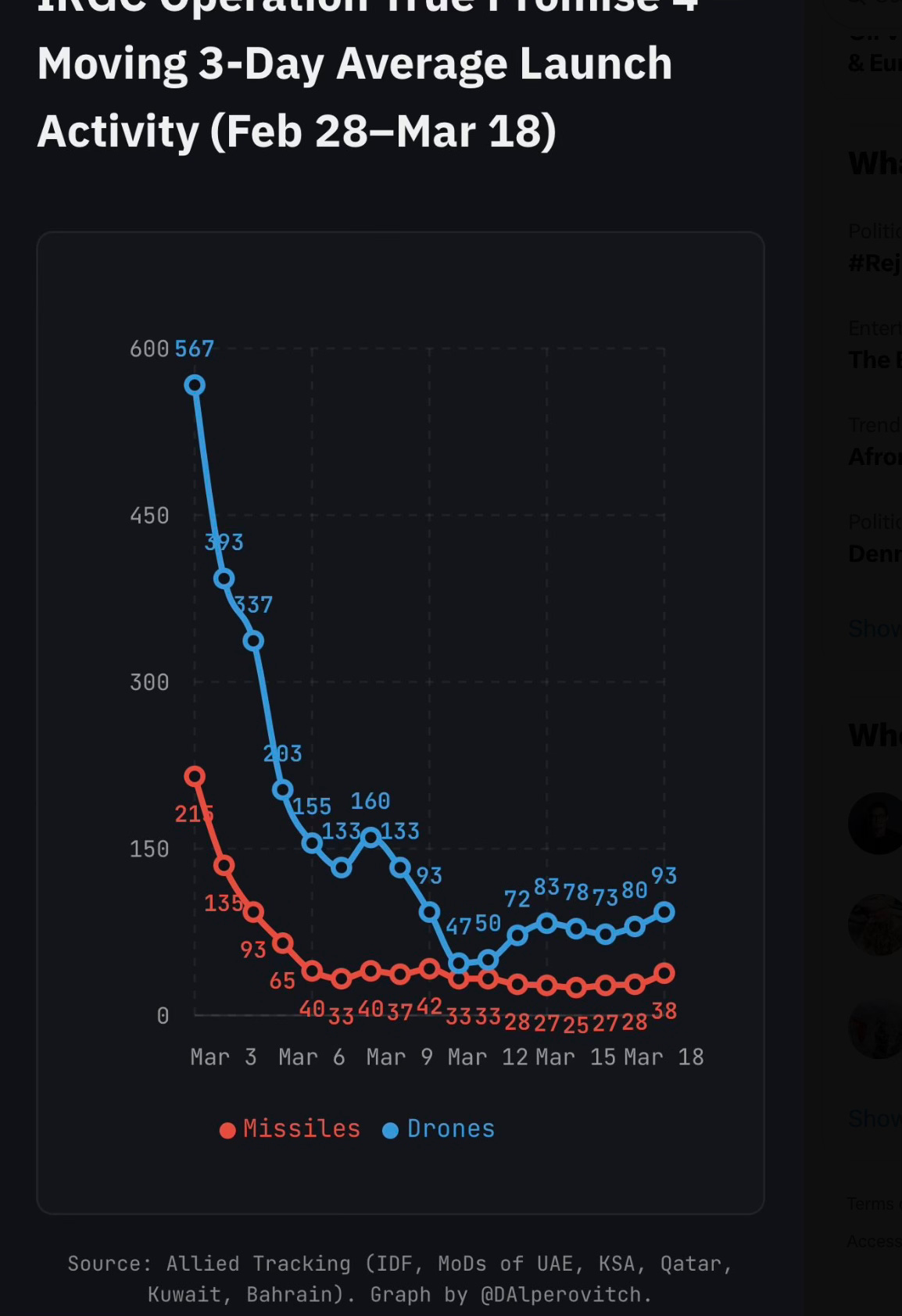
And there are signs too that the very high tempo of operations set by the US military during the first few weeks is slackening somewhat. The aircraft carrier Ford has had to stop operating after a fire, and the USAF’s big airborne tanker fleet has become more dispersed in response to Iranian strikes on its various bases. Inevitably also we should ask the question, how this many drones and missiles are getting through to key targets such as that gas plant in Qatar. After all, they’ve had some practice at intercepting them now, and the emirate’s allies (including the UK and France) have sent aircraft to boost the drone hunt.
Given this generally downbeat outlook, Iran is trying to exploit differences between the Gulf states and US, and to imply that Trump is desperate to end the conflict. On the other hand, many of the stresses within the Iranian regime, from commanders of shattered units to the machinations around the new supreme leader Mojtaba Khamenei are opaque to us and may yet cause a collapse of the Islamic Republic’s position.
But the indicators as they stand, nearly three weeks into the war are troubling for the US. And what’s more we don’t see the military moves - for example sending another carrier, tactical aircraft squadrons, or more substantial ground forces - that would indicate that America is about to up the pain level for Iran. Indeed sustaining the effort of the first few weeks could become a strain for them.
*p.s.
I’m adding a couple of paragraphs because I realised that in my haste to post this, I had not added some thoughts promised higher up this blog about why Iran might want to continue this even after the US signals it wants to stop pounding them.
There’s no doubt that Iranian decision-makers will have noted the power of the energy weapon and now believe they can use it to reshape the Gulf security environment. Statements in the last couple of days would suggest: they want to draw Gulf states further away from America, getting them to shut down US bases; they could seek international guarantees to stop Israel ‘mowing the grass’ with further attacks whenever it feels Iranian capabilities have reached dangerous levels; as part of this they could seek a Chinese and Russian backed UN Security Council resolution on future Gulf stability. Lastly there could be an incentive to carry on lobbing missiles and drones at their neighbours for internal consumption, to show their regime supporters that their power is unbowed, and opponents that the Israeli/US design for regime change has been thwarted.
Of course there will be reasons too why the regime not so publicly want this destruction to stop but as a wise Iran watcher said earlier today, Iran has a tendency to overplay its hand diplomatically. All of this means that in the absence of a rapidly agreed armistice, a lower level war of attrition might carry on for some time.
Iran has Trump over a barrel (pun intended) by blocking the movement of shipping. A simple tactic with a stunning result. How did US strategists fail to anticipate such a move? An attrition war will make us all suffer.
Excellent, Mark. Do you believe the Royal Navy will send the new autonomous mine-hunting drones to help clear the strait, given its air portability?