

Who Won?
Reading the Iran War aftermath: Part 1 the Middle East

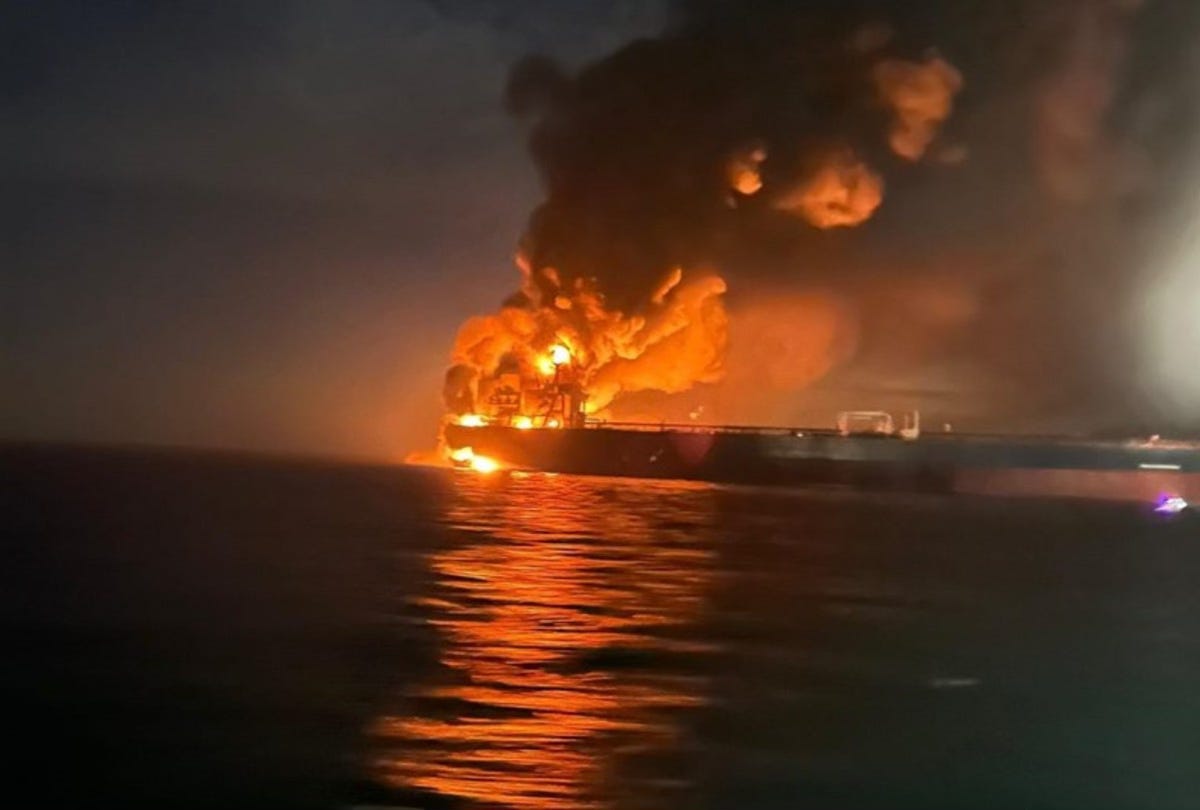
With rumours, leaks and briefings aplenty, the arguments are already raging about ‘who won’ the Iran war. And of course with this week’s strikes against Iranian ships suspected of laying mines in the Strait of Hormuz and of Hezbollah targets in Lebanon, we’re not there yet.
For me, trying to distil the realities of who gained what is made all the harder by the distortions and disinformation broadcast from all sides. Of course, Iranian media will proclaim it as a glorious victory, and those close to Donald Trump insist that he has gained things that the Obama-era nuclear deal (the 2015 Joint Comprehensive Plan of Action) never could.
There’s a further issue, which is that the largely progressive journalistic mindset of our British coverage causes them to be reluctant to admit that military solutions in general can ever work or that Trump or Benjamin Netanyahu have ever done a wise thing. There’s another reason to adopt their analytical line which is that there’s a big public appetite for takes that suggest these two men have got their comeuppance, blundering into an ill-considered war. I’ve seen this myself in the clicks that my YouTube videos for the Times or Fourcast Indicators podcasts on the same platform get when they are posted with the hook of just how badly wrong Trump in particular has got things.
Since I have been saying from the outset that the operation started on 28thFebruary was a huge gamble based on facile or flawed assumptions, it’s not like my own work has been so different from that of the journalistic or analytical pack. But I think it’s worth winding in some caveats here.
Firstly, and most obviously, the active phase of hostilities is not over yet. When Trump started the war on 28th February he told the people of Iran, “don’t leave your home… when we are finished, take over your government. It will be yours to take. This will be probably your only chance for generations”.
Evidently there was a hope, particularly on the Israeli side, that starting this war by killing the Supreme Leader, Ayatollah Ali Khamenei, would trigger an immediate regime collapse. And we know that not only did it fail to do so, but empowered elements who were harder line and less cautious than the octogenarian cleric.
Evidently the Iranian people were very unlikely to revolt while the war was on; January’s massacres were fresh in their minds and the regime response likely to be draconian if they tried anything while the country was being attacked. But we don’t know when the discontent crushed at the start of the year, exacerbated by the economic damage done during the bombing, will burst out again. If there was a coup or the country descended into civil war during the coming months, would we still think the Israelis and US were so naïve in their assumptions?
The Islamic Republic is evidently desperate for cash to alleviate these internal pressures, placing a high priority in negotiations on funds frozen in Arab states, relief of the sanctions related to its nuclear programme, and trying to use the ‘Hormuz tollbooth’ to raise more funds in the form of ‘reparations’ for war damage. Their control of the Strait, and intimidation of Arab neighbours means they will succeed in getting some of this cash – but the lifting of sanctions will be slow and conditions-based, doing little to alleviate rapidly the economic damage suffered in recent months.
Another area where we need to tread carefully analytically is the nuclear programme. Trump’s most ardent critics argue both that the Administration was lying about Iran being close to a nuclear weapon and that last June’s twelve day war did little damage to their nuclear programme.
Yes, the idea that Iran might have been close to getting the bomb in February this year was a nonsense. But that’s in large degree, to quote Raphael Grossi, boss of the International Atomic Energy Authority, because last year’s, “Twelve Day War was, in that sense, quite effective… one cannot deny that this has really rolled back the program considerably”.
What Grossi also knows is that the ongoing suppression of that programme will require onsite inspection under agreements to ensure that Iran does not simply build new centrifuges and research labs to replace the ones destroyed. It is reasonable to suppose that this year’s bombing did additional damage to the Iranian nuclear and ancillary facilities.
The outcome here is still in the balance, but a solution that removed Iran’s 400+kg of highly enriched uranium to Russia or China, or downgraded it inside the Islamic Republic under international supervision, then added regular inspections to prevent the re-establishment of the programme would be a positive one. Taking what Trump calls the ‘nuclear dust’ to America is neither necessary nor likely.
And what of the ballistic missile arsenal or network of allies, the ‘Axis of Resistance’ that Iran uses to project influence across the Middle East? Here we are in muddier waters.
As a result of its battering of Hezbollah in the autumn of 2024 (remember the exploding pagers), and its ability to withstand Iranian missile barrages in April 2024 and June 2025, Israel had appeared to demolish the entire Iranian system of deterrence constructed over many years. And indeed, we know from Netanyahu’s former defence minister and others that following the October 2023 Hamas assault, that he was petrified of the destruction that might be unleashed on Israel by Hezbollah or even Iran itself.
I can testify to the fear that existed among Israeli securocrats – it’s one of the main reasons they hadn’t tried to stop the Iranian nuclear programme by direct military action sooner. But Iran’s Operation True Promise, when it fired 120 ballistic missiles, 30 cruise and 170 drones at Israel in April 2024 (after the IDF bombed a key meeting at the Iranian embassy in Damascus) undermined the Islamic Republic’s deterrence rather than affirming it.
Having caused almost no damage to Israel, the fear among securocrats there began to dissipate. Their anti-missile defences were good, and Iran’s weaponry often inaccurate. In August that year, the IDF carried out its own retaliation, peeling back the Islamic Republic’s air defences, operating freely across its skies.
By the time of the June 2025 Twelve Day War Netanyahu and his people had swung from fear of Iran and its proxies to, if anything, an over-estimation of what could be achieved against them by military means.
He thus encouraged Trump to strike again this year. And the results, again, have been of grossly disproportionate damage in Israel’s favour, with 550 Iranian ballistic missiles and more than 1,000 drones doing little lasting harm.
But here of course is where the outcome gets very tricky for both the US and its Arab allies in the Gulf: America used up hundreds of scarce interceptors defending Israel; while Iran’s longer-range weapons had been blitzed by Israel previously, supplies of shorter range missiles, able to hit the nearby sheikdoms were largely intact; over shorter ranges Iranian attacks were more accurate; and by throttling the Strait of Hormuz, Revolutionary Guard diehards could exert regional and global economic effects.
So where does the region end up, if a deal is indeed now coming together and momentum can be maintained over the coming weeks?
Israel faces ongoing attritional battles with Hamas in Gaza and Hezbollah in Lebanon. In both places though the consequences of war have been so dreadful that if whoever wins September’s Israeli elections has the sense to engage in diplomacy, not least to staunch the slow but constant drip of IDF casualties in those places, some stability might be achieved.
With Iran too, there must surely be a desire for a period of quiet with Israel. Of course, Netanyahu’s promises of resounding victory have proven chimerical from Gaza, to Lebanon or Tehran and his pursuit of war deeply damaging to Israel’s broader international image. But he has created a situation, particularly with Iran, where their ability to wage war on Israel has been significantly diminished and at the very least a long period of re-building and rethinking is necessary.
For the Gulf states though it is a more dismal panorama. Israel’s gain may be good for a few years, but the same could be said of the pain in those monarchies. There are no quick fixes.
Iran has demonstrated its willingness and ability to destroy its neighbours’ economies in order to save itself. The mitigations – from big defence build ups to new pipelines by-passing Hormuz – will take years.
Some might hope for regime change in Iran but a popular rising there could be very unpredictable. It could dispose of a malign regime – but equally given the strength of regime support, it could result in a civil war with further evil consequences for the region.
And as all of this unfolds, belief in the USA, as a guarantor of regional security has been severely undermined, leaving the Crown Prince of Saudi Arabia or the emirs of Gulf neighbours with little choice but to work their diplomatic channels with Iran.
And this brings us to the consequences of all this for America and its ability to project military power. Undoubtedly its image has suffered here – but how far this is due to the peculiarities of this Trump administration and how far it tells us about a deeper decline will be the subject of my next blog.
My take on this Mark is that the US achieved a tactical victory and strategic defeat. The US demonstrated that it was unable to defeat Iran nor defend its Gulf States allies. The most immediate issues to be welcomed is that the WH realise they are in a hole and would like to stop digging. The really good news is the Iranians are keen to consolidate their victory with a ‘deal’. What Iran now seeks is some form of agreement which sends the US navy home. Once it leaves, it is unlikely to return. The ‘art of the deal’ is to give Trump the diplomatic fig leaf of success, without structural concessions which bind the Iranian regime. This makes clear sense to me. Having achieved battle success you need to consolidate that in some form of agreement with your opponent. This aspect of warfare is frequently overlooked but history informs us here.
For the Iranians the alternative is to rub Trump’s nose in his misjudgments & risk more bombing and its attending impact. At the end of which Iran will have the same advantageous position they have now. So time to get rid of the Americans. In 2 years time Trump will have gone. There will be little chance that the next US President will wish to revisit this debacle. Any promises made to infidel Christian Americans can be safely dispensed with at some future convenience & the ability or know how to develop nuclear weapons unfettered and your absolute regional hegemony cannot be challenged by any party, notably with tacit China and Russian backing.
The shift in the balance of power is profound and your Part 2 will hold my attention as the 2nd and 3rd order effects of this war l am stilling mulling over. In the meantime l think the ‘deal’ is doable potentially & my European touring holiday is now back on and the Alfa Romeo is being serviced on Thursday.
China