

The New Iran War
First impressions

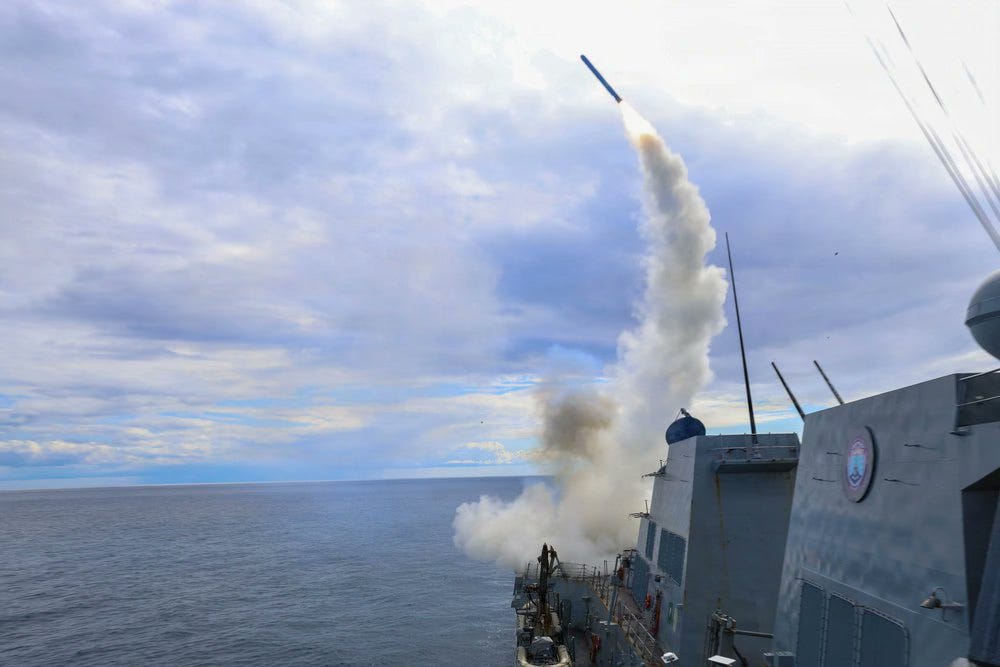
The war against Iran is barely two days old and is already delivering big lessons in terms of the conduct military operations, Middle East politics, and our concept of what is a just war. Let’s start with that last one first.
For the record, I think the US and Israeli attack has only the slenderest basis in international law. The idea that they were trying to stop the Islamic Republic re-starting its nuclear programme or that it would imminently have launched attacks across the region if left alone, seem strained to say the least.
But the problem for those standing on the legal principle is twofold. Firstly, as liberal media, politicians and lawyer need constantly to be reminded, only three wars in history have met the international legal gold standard of being endorsed by a Chapter VII ‘all necessary means’ UN Security Council resolution (Korea in 1950, the 1991 liberation of Kuwait, and Nato’s 2011 Libyan campaign).
So saying you’re against what’s going on in Iran because it involved killing a head of state, or could set off untold regional consequences has a lot more basis in my view than simply declaring it ‘illegal’. The Iran war, in its absence of an enabling UN resolution is just as ‘illegal’ as Nato’s 1999 campaign against the Serb military in Kosovo, but that was a campaign that progressives heartily endorsed.
Indeed, let’s remind ourselves that in that moment, back in 1999, Tony Blair, argued that stopping the Serbs killing what the frontiers of the time defined as their own people was such an important objective that it justified a whole new idea of ‘humanitarian intervention’ and with it the ‘responsibility to protect’. Apparently though Blair’s legal-minded Labour successors Keir Starmer and Richard Hermer, think there is no similar duty to protect Iranians from being gunned down in their tens of thousands by their own government.
Casting the role of the Iranian government in recent years more widely, has it not represented exactly the ‘threat to international peace and security’ so central to the UN Charter’s definition of circumstances when the use of force might be justified? Look at the social media of Lebanese Christians, Syrian Sunnis, or indeed Shia Iranians celebrating Khamenei’s demise.
From its use of proxies to destroy opposition to Bashar al-Assad in Syria (a struggle in which 600,000 died and 15m lost their homes), to its sponsorship of the Houthi movement in Yemen’s long civil war or of militias in Iraq, Iran’s Revolutionary Guards have sowed suffering and death throughout the region. Let’s not forget also their role in killing US and British troops from the 241 US Marines slain in the 1983 Beirut bombing to the ones blown up by Iranian-supplied roadside bombs in Iraq.
Several European leaders have cleaved to the argument that Trump’s war is ‘illegal’. In Starmer’s case this initially meant no use of British bases to strike Iran. Late on Sunday evening government policy changed - due in large part to Iran’s attacks on Gulf states, which created in the view of UK government lawyers a suitable justification for defensive operations.
Shadow Attorney General Lord Wolfson argues, “if the doctrines of international law prove unable to restrain Iranian terrorism and mass murder, and tie the hands of democracies while forcing them to stand and watch Iranian atrocities, international law will have failed”.
I’m worried by the possible consequences of what Donald Trump and Benjamin Netanyahu have unleashed. But I also think Wolfson has a point. We need to consider historic concepts of just war in this context rather than believing in the near impossibility of gaining an enabling UN resolution.
I imagine Starmer has been in this bind because the politics of aligning with Trump and Netanyahu are toxic for him. Hermer, a complete sceptic when it comes to the just use of force by his own country, had given him a useful pretext. However events quickly, and policy may shift again as the week progresses.
The UK, France, and Germany, all countries very involved with diplomatic attempts to contain Iran’s nuclear programme as well as victims of its proxy forces or terror cells initially made themselves irrelevant to the unfolding regional war. But on Sunday evening they agreed to join in “necessary and proportionate action” to thwart Iranian missile attacks. Whether this means active military operations, we shall see.
Meanwhile countries like Saudi Arabia, the UAE, Qatar, and Bahrain have become very much involved because Iran fired hundreds of missiles at them as the war began.
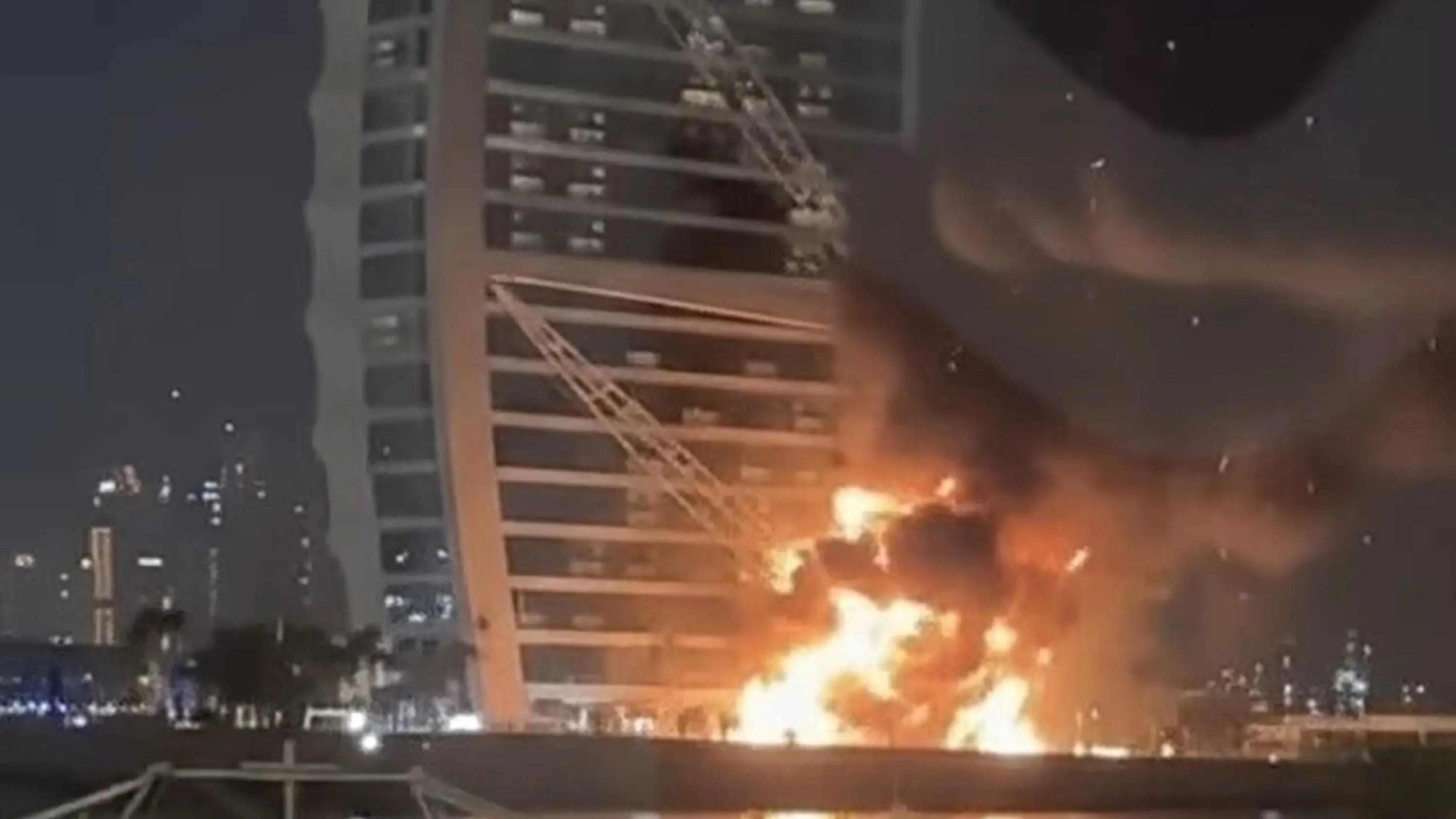
Some of the Gulf states wanted to remain neutral in this, previously denying the US the use of their bases for an attack, but Iran, whose leaders have contempt for the ‘soft’ Arab sheikdoms of the region thought that doing this would alarm those emirs into putting pressure on the White House to stop the war. This, along with holding meetings of their entire political and military leadership after what happened last June and refusing to engage seriously with diplomatic efforts of the past few months, has proven to be another mighty miscalculation by the Islamic Republic’s bosses.
Not only are the Gulf leaders now committed to defend themselves, but they are far more useful to the US as allies in this. Their bases offer proximity, and a couple (notably Saudi and the UAE) have very capable air forces with deep stocks of precision weapons as well as air defence systems.
In short, if they become fully involved they bring more to the Coalition than Britain or France, and none of the moral of legal qualms. And even if they don’t join in defensive action, some like the UAE, have made an investment in defensive systems that dwarfs anything the UK or France could deploy there.
As for the business of raining destruction down on Iran’s military and security establishment, it gathered pace on the second full day of the war, a consequence of the US and Israel achieving ‘air supremacy over much of the country. Despite fielding an air component a fraction the size of that used against Saddam Hussein’s Iraq (400 US and Israeli strike aircraft now versus four times that number back in 1991) the number of sorties flown during the first twelve hours of this current operation was 1,500.
There could be some definitional questions there – of counting all planes flying versus just fast jets in the conflict 35 years ago – but it appears that the large fleet of tankers and clever basing have allowed the US and Israel to fly very high rates of sorties
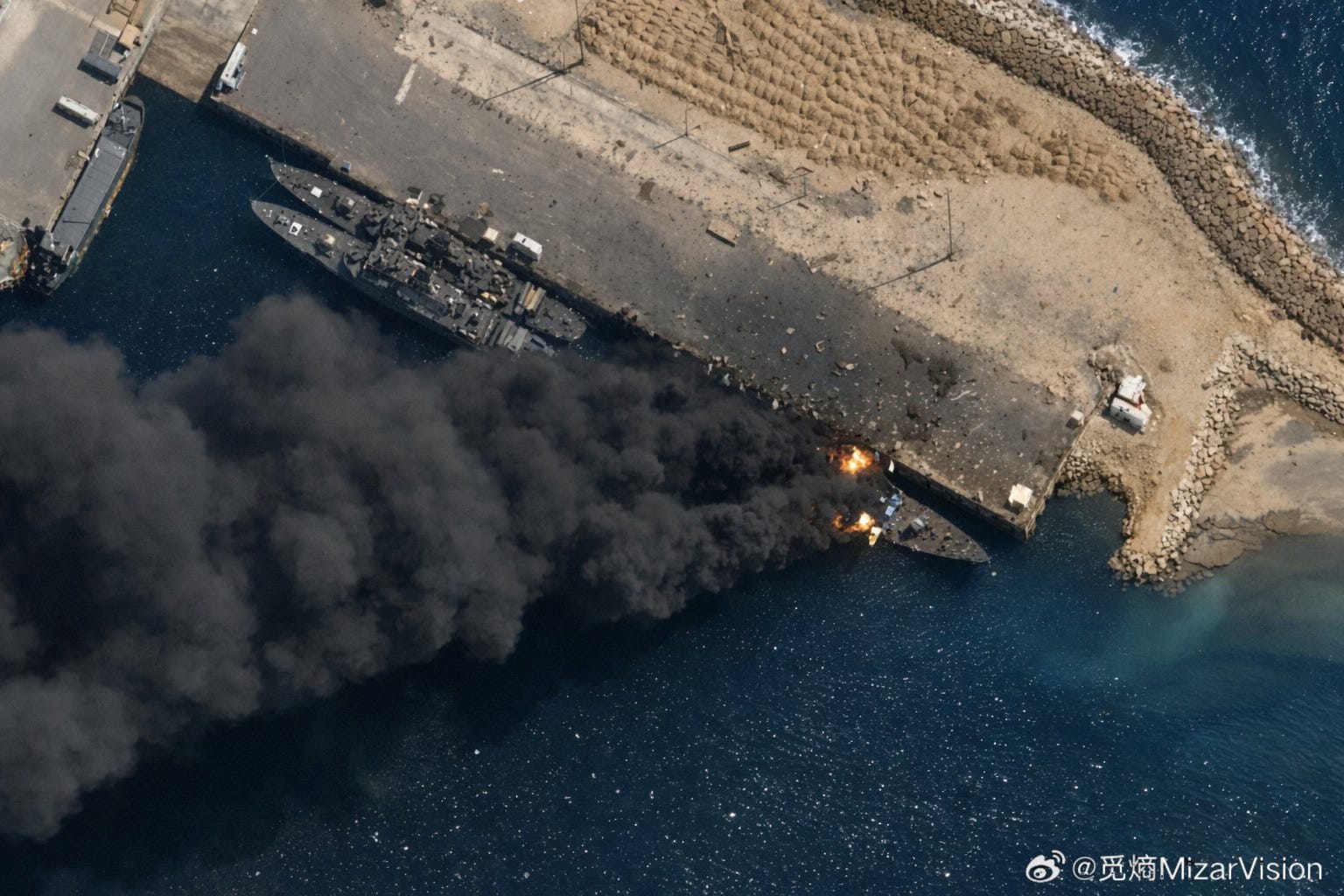
.Orbiting over Iran, taking on additional fuel when needed, these two advanced air powers have now established ‘stacks’ of combat aircraft ready to be cued in by air controllers using drones or electronic intercepts. Open source analysts are now posting the results of satellite passes showing the results, from crippled Iranian warships to collapsed underground missile facilities. And they’re just getting started.
President Trump appears to think this can give him a rapid victory, a campaign of just a few days, even if that involves doing a deal with the surviving regime clerics and generals. But one of the big questions now is whether those Iranian decision makers will opt to fight on, accepting further drubbing from the air over the coming weeks.
They may well argue that America’s use of force while further talks were planned makes a negotiation pointless and that Khamenei’s death must be avenged. So this may well prove harder to end than the White House anticipates.
No doubt, using their ballistic missile launchers or minelaying vessels in the Strait of Hormuz will expose Iranian forces to destruction. But if the people have been too traumatised by the recent suppression of their protests, Iran’s leaders may be able to hunker down and continue.
By decapitating the clerical and military leadership the US and Israel may have made it harder for any Iranian leader to marshal consensus within the regime for ending this. So the big questions about the ‘end state’, what constitutes victory for the US remain. And in talking up the possibility of the rapid deal, Trump apparently sees no contradiction in making that agreement with the regime, and once again leaving to its meagre mercies the Iranian opposition.
Some good points well made about what the concept of a just war vs a legal war. However, I think it fair also to take into account intentions, plans and probable outcomes. It looks as if some civilians in various countries have already paid a price for this adventure. I suspect that the intentions of the two national leaders who signalled go are much more focussed on domestic consumption and indeed their own political careers - not a great starting point.
But what are the credible plans for actual regime change? So how does this help Iranians ? We’ve seen enough of these adventures end in chaos and failed states. I’m no defender of the Iranian regime ( the backbone of which, the revolutionary guard, seems very much still in power), but I want good intentions, good planning, and competence to achieve the task. I worry that we don’t have any of these things.
Good post. I also agree that Wolfson has a very good point. If the net effect of "international law" has become to make it harder to stop rogue states doing evil things, then it has become an immoral force and we should do away with it or remake it totally. Unfortunately it's been clear for some time that Hermer thinks the West is the biggest source of evil in the world, and we really need to stop listening to people like that.