

The Myth Exploded
What Trump's words did to the 'special relationship'

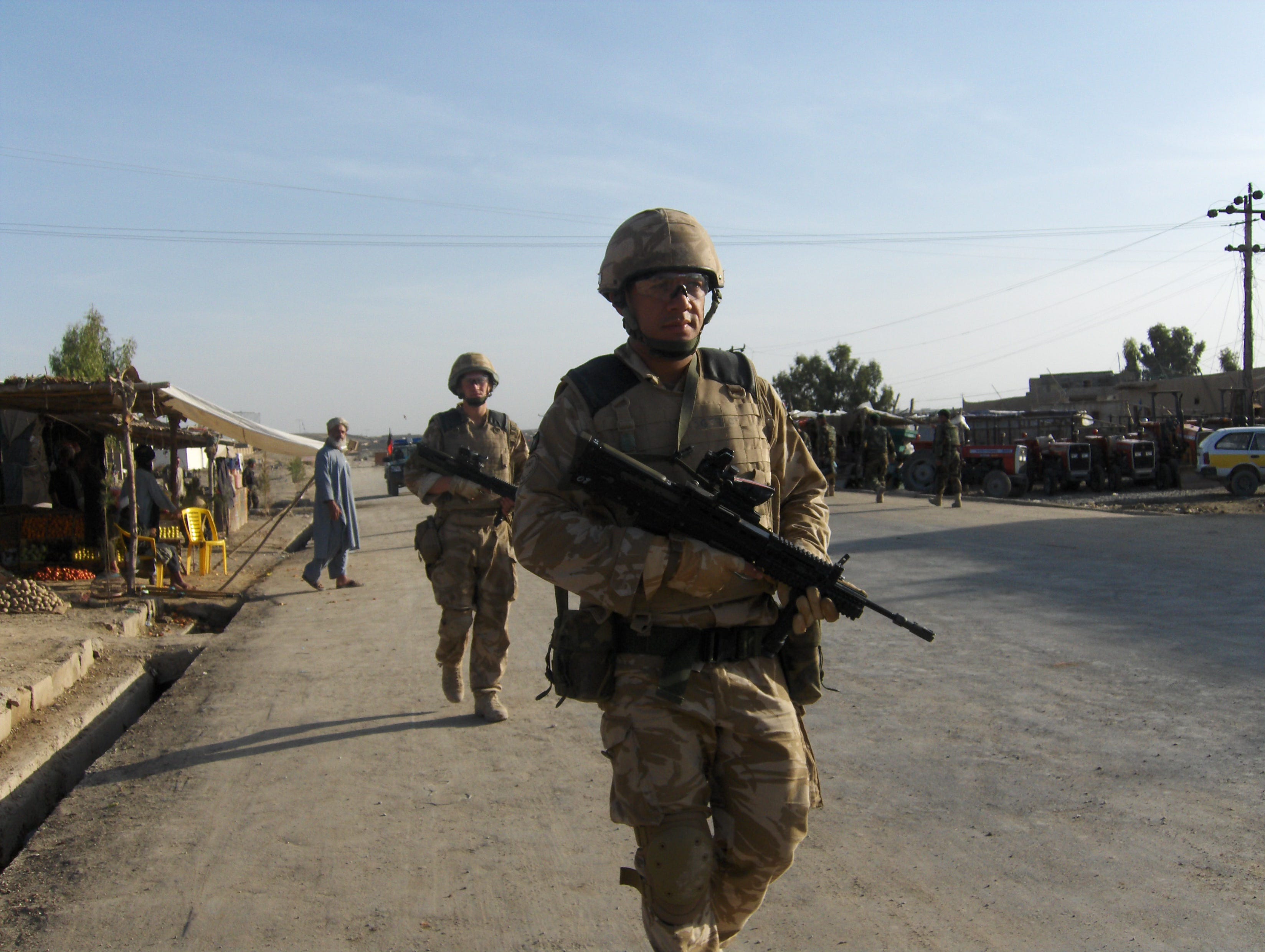
Several days ago we witnessed something quite remarkable – so much so that I wanted to reflect a bit before writing about it. It was a moment of national anger and grief touched off by Donald Trump’s throwaway remarks that America’s allies had ‘stayed back a bit’ in Afghanistan.
His callous words produced a sense of national unity of a kind we rarely witness nowadays. While the remark was made about Nato troops in general, it hit particularly hard in Britain.
From the cold anger of a dead soldier’s mother interviewed on Radio 4 to volleys of abuse on social media, it was such a blast of emotion that even Keir Starmer, who has been tiptoeing around the president for the past year knew that he had to condemn Trump’s words as, “insulting and frankly appalling’.
There were a few things going on here, I think. In the first place, the president had picked a scab off a national wound that is still livid; the loss of 636 members of the British armed forces, 179 in Iraq and 457 in Afghanistan. Suddenly the memories of widows placing flowers on hearses passing through Wooton Basset or young lads struggling to master their prosthetic legs at Headley Court came flooding back.
We have still not processed this trauma properly as a nation. The cadre of servicemen and women who went represented a small part of the population – and their sense of public and political indifference to their experience produces occasional flare ups that the Westminster mainstream characterises as veteran or ‘military covenant’ issues.
Travel outside London and the symbols of remembrance tend to be more prominent and a perception of political and media indifference to our war dead has become mingled with other issues, creating fertile ground for the populist right. I intend to come back to that in a future substack – but for now I want to focus on some short term consequences of Trump’s words and the significance in our history that I alluded to earlier.
One of the reasons so many people felt livid about this implication of cowardice is the understanding that Britain only committed its troops to those conflicts as a gesture of friendship and support to its closest ally. And long before Trump triggered us there was an implicit recognition that these operations, particularly in Afghanistan, had ended ignominiously. All of that loss and pain was for nothing, it seemed.
The wider significance of this is a shattering of the illusions still held by many, about, dreadful phrase, the special relationship.
In 2002, several months ahead of the invasion of Iraq, Tony Blair was asked whether this country would join in that action as a way of paying the ‘blood price’ of this alliance. Blair said yes, adding that expressions of support were one thing but the fundamental question was, “are you prepared to commit, are you prepared to be there when the shooting starts?”
Well, we certainly paid the blood price and look where it got us. Perhaps now we can discard any lingering national naivety about where we rank in America’s view of the world. The title of that 2009 movie seems to sum it up: ‘He’s Just Not That Into You’.
If you want an empirical measure of that, have a look at the US National Defence Strategy published last month. The broad picture is of stepping back from commitments in many parts of the world in order to focus on the Western hemisphere and China.
Allies are told to take up the slack, with Israel and South Korea being painted as model partners. They get ten and five mentions respectively, and the UK? It’s not specifically referred to at all.
Of course, America will act in its own national interest and it’s always been naïve to expect otherwise. Reading Alan Allport’s excellent history of Britain’s Second World War, I was reminded that even in 1944 influential voices in Congress led by future president Harry Truman tried to cut off the supply of lend lease weaponry to this country. In what reads like a Trump prequel, Allport writes that Truman suggested to President Roosevelt that, “he ought to wield Lend Lease as an instrument with which to prise the British from their valuable global oil and mineral rights”.
And of course subsequent American presidents insisted that we pay off every cent of that debt. The US Secretary of State said in 1945 that the British shouldn’t be indulged as, “pensioners for an indefinite period”.
In the Fifties the US shafted Britain over the Suez Crisis and did its best to accelerate the unravelling of Empire.
When writing a book about British intelligence and the end of the Cold War, I was told by one Downing Street insider, that during the 1991 war against Iraq, he had been surprised to arrive at work to discover that President George Bush had decided to end the war without any consultation with his British allies. Consider this was 25 years ago when the British armed forces were able to play a much larger role than they would be today, having sent more than 50,000 people and 150 combat aircraft to the Gulf.
During the ‘war on terror’ period following the 9/11 attacks, the UK had even less influence. And from Basra to Helmand those of us covering these campaigns started to hear American commanders occasionally disparage the British contribution as being too passive or ineffective.
Blair’s payment of the blood price, far from keeping the relationship on track exposed our forces, causing at least some senior Americans to question their value. Much of the public may be unaware of that, but the understanding of these criticisms among our veterans, and the way they may have seeped into Trump’s mind made the ‘staying back’ line hurt all the more.
Those fighting the rearguard action of Transatlantic security cooperation argue that there are still areas where the UK and US have a more equal and vibrant relationship. Fifteen years ago the ones you would often hear referred to were: nuclear submarines; special forces; signals intelligence; and the Royal Navy’s minesweeping force.
There are still important institutional and personal relationships in these areas. Attempting to mend the damage of Trump’s remarks, Admiral Bill McRaven, US special operations commander at the time Osama bin Laden was killed paid tribute in the Atlantic last week to allies in general and the SAS in particular. “We may find ourselves fighting alone someday”, he wrote, “and trust me, war is never a contest you want to fight alone”.
It’s fair to say though that there are some concerns in the US Special Operations community that the British government no longer has the confidence to use its special forces as aggressively as it once did. And the minesweepers? at this moment when Iran may attempt to block the Strait of Hormuz, it cannot have escaped the US Navy’s attention that the squadron that until recently was based in Bahrain has been run down by the Royal Navy as an economy measure.
As for the 5 Eyes signals intelligence relationship between America’s NSA and our GCHQ (as well as Canadian, Australian ad New Zealand agencies) this has long been heavily imbalanced. Lieutenant General William Odom, NSA director 1985-1989, told me back in the Nineties, “even though we get ripped off [by Britain] as long as we’re in Europe we go along with it …we’re better off with you putting in your little bit than if we threw you out”. The imbalance that he described during the late Cold War period has worsened since.
After 9/11 the NSA invested in huge data centres needed to store the metadata of a sizeable chunk of global telephony and email traffic. Following a terrorist act that capability allowed them to map out the connections between suspects going back years. GCHQ drew heavily on these databases but could not match those levels of investment.
Of all the traditional crucibles of the UK/US relationship it is the nuclear submarine one that remains the most intact and arguably the least unequal. Speaking to Andrew Corbett, former commanding officer of one of our Trident subs, recently, I was reminded of the importance of professional ties. “In my experience the American armed forces are extremely reliable, regardless of this particular regime’s ideological dalliances”, he said, adding, “I will continue to trust the American military in a way I don’t trust the White House”.
I don’t doubt that our submariners, or indeed our special forces or eavesdroppers, still have deep bonds with their American colleagues. Things are shifting at the popular level though.
Now of course many in Britain are having their doubts about whether this cooperation still counts as much as it did. Stories on social media about ‘kill switches’ for F35 fighters or our nuclear systems outpace the denials coming from the professionals. These days for example pooling the stock of Trident missiles, seems like an unacceptable compromise in an age of Trump, to many opinion formers at least.
Perhaps when Trump is gone the focus will return to friendships at the popular level, with all of those powerful connections that come from culture and language. But British visits to the US were down 14% on the year, figures for March 2025 showed. Polling suggests that whereas 54% of Britons considered the US our closest ally in 2024 that had dropped to 31% by last July.
When you look through the other end of the telescope, Americans still tend to see Britain as their most dependable ally – but the numbers aren’t huge, just 18% giving that view in a recent Pew survey.
On the other side of the ledger there is a blend of the anti-British sentiment that comes from the country’s revolutionary history, the evergreen resentment of Irish-Americans, and a broader desire to deny Britain any special favours. This applied even in the dark days of 1944 during that debate about whether to continue sending weapons to Britain on the never-never, when 70% of Americans polled said they wanted every cent of the aid money back.
Britain finally paid off that debt at the end of 2006. That was a time when our soldiers were fighting and dying in Iraq and Afghanistan.
Facing last month’s popular anger, Trump tried to recover from his gaffe, posting on social media that British troops were, “among the greatest of all warriors”. But the damage had been done. If the whole saga causes British people to be a little more clear eyed about the power political realities, and not to delude themselves with talk of a ‘special relationship’ perhaps that is not entirely a bad thing.
Interesting article, Mark.
Trump's remarks were so obviously preposterous that frankly, I am mildly surprised at the level of outrage - and I say that as a former soldier with 6 NI tours across the province in the 70s under his belt.
Which brings me to the NI Troubles Bill. The 'six points/protections' for veterans in the legislation are as much use as a lawyer in a gunfight. I bet that's why SASRA's lawyers are suing the government. And I bet Uncle Sam is right behind them - because their guys do vital work with our guys and they're appalled by what's going on. (You may know that a former CO of 22 SAS visited USA in November/December. Er, not as a tourist.)
The US Department of Defence recognises that Britain provides a useful chunk of what the Americans call Tier One Special Forces who are critical in the fight against terrorism, and therefore, a strategic asset for the West, as are HM armed services more generally. Every other member of NATO recognises this, too. So does the Five Eyes. In its courteous but colossal indifference, does the British government? Does it hell. Nor will it look like it until they junk this iniquitous vexatious lawfare which is nothing less than legal malpractice. With a difference. This time, it's being done BY THE GOVERNMENT as an act of appeasement – which means sacrificing vets. Otherwise, why bother with it?
To put it another way, who cares about dodgy lawyers playing at lawfare when the government is doing the same thing? And there was quite a lot of publicity last week about lawfare following ops in the Iraq war, and it is indeed still going on about SF ops in Afg.
Apologies for going somewhat off-topic but I think the NI Troubles bill will do far more harm to Britain’s armed Forces in terms of morale and recruitment than a few barmy words by Trump. In fact, the Troubles Bill must make the US wonder what the hell is going on in Britain.
Wow, if you feel betrayed because Trump made a disparaging remark, think how Canada feels to have sent 150 to cold graves, protecting Americans and their adventure in Afghanistan, only to actually fall under threat and be told those Americans we protected will soon be moving in and shooting any Canadian soldiers in their way.