

The Drone Trap
And how we might avoid it...

I’ll say one thing for the British government. Their spin on the Defence Investment Plan, shorter version ‘ooh shiny drones’, worked well for a time. Knowing the weakness of many commentators, news editors, and lovers of tech for such systems, it was a predictable play.
And sure enough, many of the scene-setting pieces majored on that theme, while on Tuesday Radio 4’s Today programme went to a Ukrainian drone commander and someone making these devices in this country before giving a few minutes to General Richard Barrons, one of those who’d written last year’s Strategic Defence Review or SR, to get to the essence of what yesterday was about, which is that the government is still dodging the financial commitments necessary to meet its own funding promise to Nato, something considered essential by military chiefs.
I have since before the SDR was published, written repeatedly about the centrality of this financial question. And regrettably it was all too clear before the Defence Investment Plan (DIP) was published yesterday that it would not significantly change an offer that the previous defence secretary and his armed forces minister considered so inadequate, and so far adrift from the government’s language about preparing for war, that they both resigned.
By Tuesday evening, diligent work by political correspondents and financial analysts had exposed the hollowness of the ‘new money’ claims. Underlining the dark comedy of it all, the lobby were soon stampeding in the direction of a strong Westminster angle, that Keir Starmer was passing the parcel to Andy Burnham to work out where billions of this would come from.
So today I’m going to consider the question of why the drone story is such catnip for journos and commentators. The first and most obvious point is that well educated, often progressive, generalists don’t particularly like military spending or the senior officers who they see as constantly demanding money with menaces.
Of course, there’s a humanitarian impulse here too – why put people in harm’s way, far better to lose an uncrewed aircraft than a pilot. Well, amen to that.
As someone who’s been a tank crewman and smelled the incinerated remains of others in war zones across the world, I’m very keen on the idea that people might not have to go to war in them anymore. But for lots of reasons, for example that the soldier operating it remotely is not as good at stopping it from getting stuck in ditches, we’re not quite there yet.
‘But, but Ukraine!’ comes the rejoinder. Yes, they are using robot ground vehicles to evacuate casualties from places too dangerous for crewed ones or flying in supplies by drone, but they are also working hard to find ways to protect their tanks better, their army chief said this week, so that they can restore some manoeuvre to the battlefield.
The mangling or misrepresentation of Ukrainian drone experience is an important part of newsroom discussions. I’ve several times been told that ‘people are shooting down a $5,000 drone with a $5m missile’ – versions of those figures may vary.
And while that has happened, the Ukrainians in particular have gone to great lengths to avoid doing it in recent years. The vast majority of engagements there deal with Russian attack drones by jamming or low cost interception.
Another trope is ‘billion dollar/pound warships wouldn’t last five minutes with all those drones around’. That’s another misreading of Ukraine experience – many of the big hits from the Russian cruiser Moskova to a submarine in dry dock were carried out with legacy weaponry, cruise missiles, not drones.
And what about those billion dollar American destroyers that have cruised back and forth through the Strait of Hormuz recently, swatting Iranian missiles, drones, and speedboats away as they went? Very evidently that kind of ‘exquisite capability’ a highly advanced warship with the systems required to deal with attacks from the surface, air, or subsurface, is still viable for now.
The thorny issue for people writing something like an SDR or a DIP is whether that very expensive, crewed, destroyer will still be viable in ten or twenty years’ time? You might argue that what we’ve learned in Ukraine or the Gulf is that pulling apart that exquisite weaponry like a warship or fighter jet can allow you to get part of the mission the pilot or ship’s complement would have done performed at lower risk, but cost-wise, I’m not so sure.
A Ukrainian FP-1 drone, for example, can fly one thousand kilometres into Russia and blow up an oil terminal for about $50,000 a pop. But then think about a weapon that isn’t a ‘one way effector’ to use the ghastly British jargon, something you can use many times over to drop bombs or launch missiles, and the add some sensors to it so it can detect its own targets.
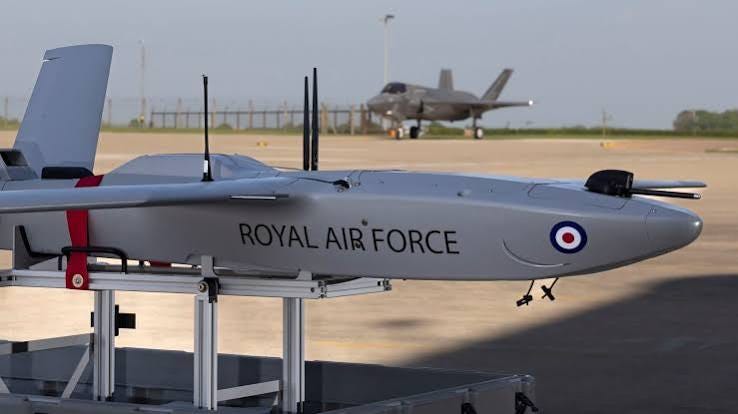
Well then you’ve upped the spec a lot, and what you’ve got is an RAF Protector uncrewed air system that will actually cost you £30m to buy. It’s much cheaper than an F-35 piloted jet – you can get ten Protectors for the price of three F-35s.
But in Iran and Yemen we’ve seen rather a lot of these unpiloted planes (American Reapers) getting shot down – dozens in fact. It’s not the equivalent of an F-35 either in terms of stealthiness, in-flight refuelling, or manoeuvrability. Add those characteristics to a Reaper or Protector and you start closing the gap between the £30m cost of the drone and the £100m of the F-35.
And how to control advanced uncrewed weapons, especially ones like submarines where communication with a distant headquarters can be very difficult? Full autonomy? Many people are uncomfortable with that, not least the crews of ships that might get torpedoed by an autonomous submarine.
Think about the fighter jet too, and the many scenarios it might get used in. If I’m ever on a hijacked plane, I’d rather there be a person in the cockpit of the interceptor sent up with orders to shoot it down if necessary.
This brings many of us to the realisation both that a mix of crewed and uncrewed systems are likely to remain necessary. And also that by ditching the old Cold War habit of combining ever more attributes into a single weapons system, there could be some real opportunities.
So to one of the most eye-catching aspects of the DIP, its plan to shelve the Type 83 destroyer, designed to replace the Royal Navy’s Type-45 air defence ships. The new plan is to pull apart that capability so that it’s not vested in an exquisite, crewed, vessel, probably costing £2bn a time, but in an autonomous sensor vessel (with the radar) and another sort of vessel with the missile battery.
It’s easy to see pros and cons with this approach. For example, if the ‘missile barge’ had fired off all its weaponry, it could return to port to rearm, while the sensor ship remained on patrol. The individual parts of this system (six ‘support vessels’ are also planned) will surely come in well below the cost of a Type 83 destroyer, but add them all together?
I get the sense that one of the ways this new approach appeals to those in uniform is that it could end the domination of the big prime contractors, the firms like BAe or Lockheed Martin. And this is where the bitter experience of cost overruns involving over-specified weapons has created a sweet spot, a coincidence of interest between those who bear grudges against these defence contractors and the drone-struck enthusiasm of the commentariat.
It may well be that ‘dis-aggregating’ advanced weapons, using unpiloted ‘wing men’ for fighters or a floating sonar station rather than an anti-submarine frigate, will offer real chances of doing a better job, more cheaply. It seems pretty clear already that using long range strike weapons from drones to ballistic or cruise missiles, offers many advantages over legacy piloted air strikes so western countries are investing accordingly.
But let’s not pretend there aren’t risks too. If your missile battery autonomous ship proves a lot easier to build that the radar station one and is ready to go to sea three years ahead of it, you still don’t have a viable system. If the enemy perfects ways to fry the datalinks between them, ditto.
And talking of linking them up, if you’ve eliminated the legacy big prime contractor from the procurement equation because you felt they’d fleeced the taxpayer one too many times, who is going to take responsibility for integrating all the elements of your ‘dis-aggregated’ fleet or air force? New firms, disrupters like Anduril, Palantir, and Helsing, are vying for that type of business.
So yes, the crisis of military preparedness that we now face demands new solutions. And it creates plenty of opportunities for drones and disruptors. But will it all cost much less? I doubt it.
Mark,
Sadly you are a little behind the curve but understandably so. Those of us who have lived the drone industry for many years understand the limitations of this technology but the need for drone technology (across all domains - land, maritime, air & space) to complement traditional defence technology and tactics is unquestionable. I’m not sure how much time you have spent in UKR but it is a game changer…but not in isolation. Indeed many Russian vessels were sunk not by cruise missiles but by USVs which now play a key role in Black Sea operations.
I do take your point about the risks associated with moving from large primes to SMEs but, apart from the extortionate cost, they are simply too slow. So, you may be pleased to hear that there are plans underway to create a significant sovereign capability in the UK without the big Primes which will reduce the need to buy tech from US companies and enable greater integration while still using SME tech. Vague I know but I can’t say any more at this stage…
I would suggest keeping a weather eye on what emerges in coming months…it may alter your perception 👍
This is so true; the new and the shiny distract from the real issues.
There is still a large elephant in the room that no one likes to discuss, that being the huge increase in the size of the army needed to be a viable option in any forthcoming war. This doesn’t have to be a standing army but rather a large army of reservists, created by a combination of incentives and if necessary compulsions. This is exactly what the majority of mainland European states are doing or have already achieved.