

Tell Me How This Ends?
Where the Iran war may go from here

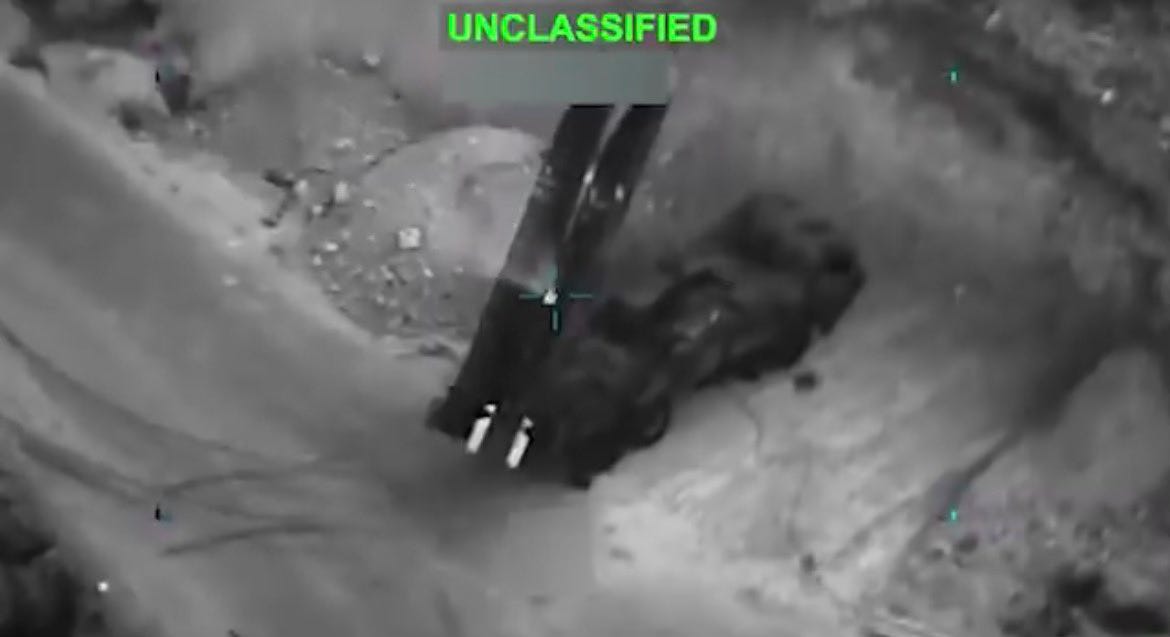
We are three days in to this now and the conflict has escalated dramatically. The US/Israeli bombing attacks have triggered a spasm of Iranian retaliation that has spread across the Middle East and as far as Cyprus.
As this happens, again people will ask, as they have since the outset, what are the war aims here? It may come as no surprise to students of the Donald Trump school of presidential communication that he has given inconsistent answers to this question.
Announcing the bombardment in a televised message, he said action was underway, “to prevent this very wicked, radical dictatorship from threatening America and our core national security interests”. But he also appealed to Iranians to take control of their government once the bombs stopped falling, urging, “now is the time to seize control of your destiny”.
At the outset then, an odd conflation of war aims, involving thwarting Iranian nuclear ambitions as well as power in a more general sense, while urging a popular rising – but only once American action has halted. This mixed messaging has been followed in subsequent days by suggestions from Trump that he could, “end it in two or three days”, then on Sunday he talked about, “four weeks or less”.
As for the really key thing, the terms on which military action might end, there’s also been a host of different messages. At times there have been suggestions of regime change, at others suggestions of a ‘deal’ that carry an implicit assumption that this involves an agreement with Ayatollah Ali Khamenei’s successors.
On Monday, at a Pentagon briefing, General Dan Caine, Chairman of the Joint Chiefs of Staff said the aim of his operations was, “to protect and defend ourselves and together with our regional partners prevent Iran from the ability to project power outside of its borders”. Former US Middle East envoy Brett McGurk commented, “that’s a more defined military aim than one promising political end states”.
So, let’s consider the following during the coming days:
By discarding talk of regime change, the Pentagon sets what is seemingly a more achievable objective. But the talk of overthrowing the government could easily return – either from Trump shooting from the hip or because Iran’s actions, in setting aflame the region’s oil industry and attacking all of America’s allies causes a fundamental mission creep back to one of overthrowing the system.
It is evident that America’s friends – from Israel to the UAE – may well argue that future peace is impossible if the new Iranian leaders are left in place, and an enormous bill for reconstruction and ecological harm needs to be paid by them. But Trump, as we well know may well ignore these friends if he thinks the war is getting too messy and wants a rapid resolution.
By adopting this approach the Pentagon hopes to leverage its strengths. In the attritional battle between Iranian ballistic or cruise missile as well as drone launchers, the US and Israel will be assuming that they can eliminate this weaponry fast enough to limit damage in the region and blunt Iran’s military options.
No doubt, there is a very impressive intelligence and air force system now at play. They can and will do enormous damage to Iran’s military forces and arms industries. It may even be that this causes the regime to fall. But so far, the signs are that Iran’s leadership will be ready to suffer a heavy price.
Iran will play for time, husbanding its missile launchers, trying to boost drone production, all in the hope of exhausting the Americans through a combination of allied pressure prompted by the horrible economic consequences of this, Trump’s impatience, and ebbing stocks of defensive as well as offensive weapons. The approach adopted by the Pentagon allows them in theory to stop when they want to, saying they have achieved their aim of blunting Iran’s ability to ‘project power outside its borders’. But it is one of the oldest clichés of the American military estimate that ‘the enemy has a vote’.
Iran may simply refuse to stop fighting. It’s quite possible after weeks of bombing that, under pressure from Trump, the Pentagon will announce its aims have been met but Iran may – initially at least - decline to enter a negotiated ceasefire. After all their revered leader has been assassinated along with much of the Revolutionary Guard’s top brass, emotions are high and the desire for revenge strong.
So long as their repressive apparatus remains effective against regime opponents, the Iranians may feel an occasional rocket or drone attack or release of mines into the Gulf is enough to sell the message internally that they are undefeated. This is very much what happened last June, when the leadership used the fact that they could get the occasional missile through to Tel Aviv and fact that Israel agreed to a ceasefire to claim victory.
A deal with Ayatollah Khamenei’s successors may then be the only way to restore regional calm. If such an agreement involved them ‘drinking the poisoned chalice’ of significant limitations on their nuclear and missile programmes that might allow both sides to claim a win. Trump would say job done, and the Iranian leadership would argue it had seen off the most powerful military in the world and could expect relief from economic sanctions as part of the bargain. In that scenario, just don’t mention freedom for the people of Iran.
How much longer have we got to put up with this terrorist state - and its proxies - for? Most commentators seem to think it's all fine.
Whatever happens to Iran, the action will have been worth it. I am sick to death of the endless impunity granted by European democracies to this vile regime.
Death did not come too soon to Khameini and his murderous thugs. But Starmer put it very succinctly: “We all remember the mistakes of Iraq, and we have learned those lessons. Any UK actions must always have a lawful basis, and a viable thought-through plan.”
A not-so-coded comment on Trump’s attack on Iran: not lawful, and he doesn’t have a scooby on how this is supposed to end.