

Operation Maybe
France and Britain sail a little closer to Hormuz on a tide of caveats

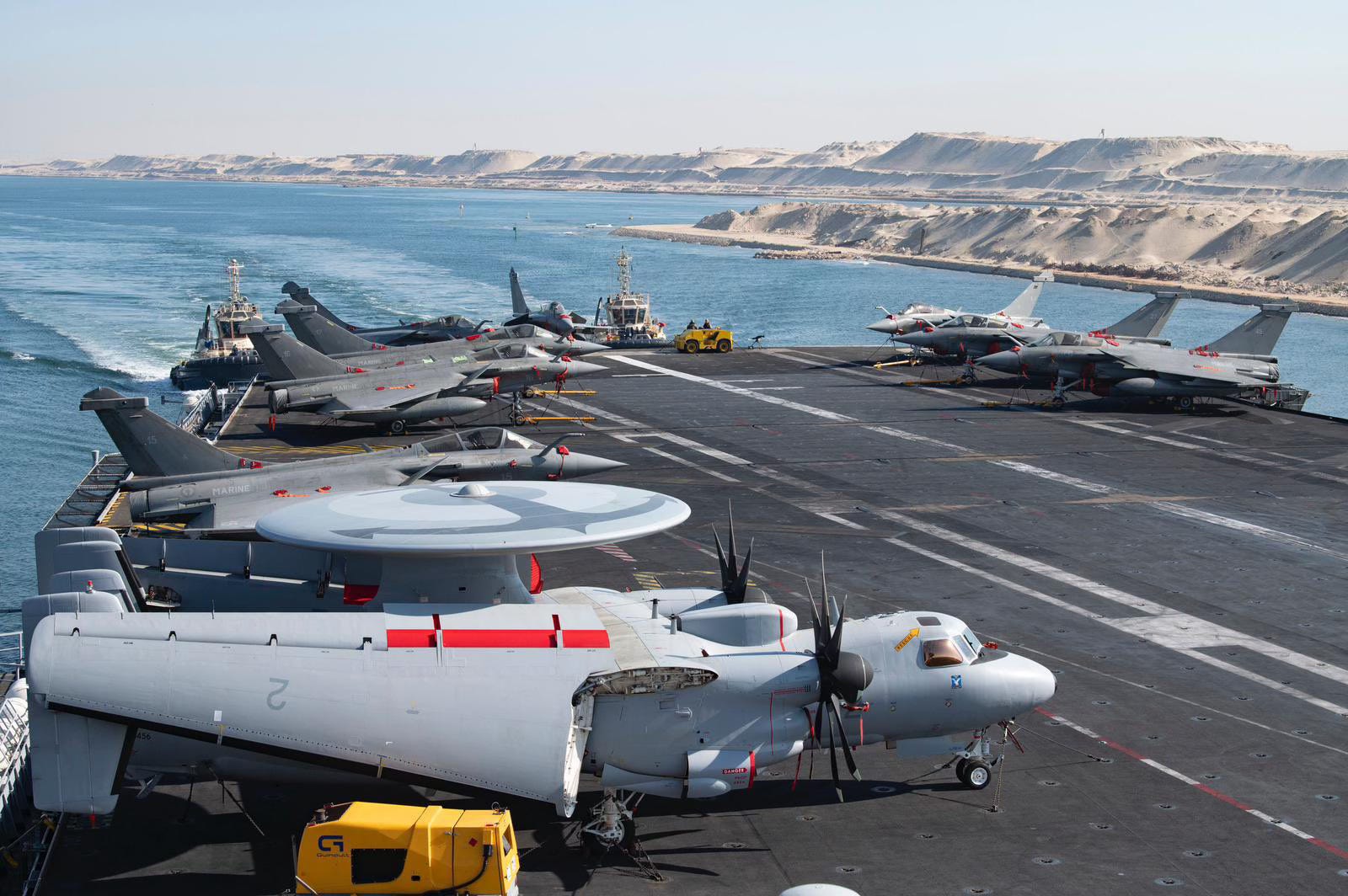
French and British warships are making their way into Middle East waters, raising an expectation that action may soon be joined. And if the rumours about diplomacy to end the Iran war gathering pace are true, we may indeed see a plan coming together.
It would be easy to be cynical because we’ve seen this movie before. Keir Starmer and Emmanuel Macron promised to lead an international force to secure a deal in Ukraine too. And of course despite the elegant phrasemaking and flag-decked summitry in Paris or London that hasn’t happened.
What the two missions have in common is a desire to be seen as ‘doing something’ but a great aversion to doing anything that might lead to their armies or fleets having to fight. I don’t want to sound too jaundiced because after all as the downstream consequences of the Gulf conflict, from galloping oil prices to an inflationary bounce, reach European shores, citizens may well be wondering why their governments seem captured by events rather than having any ability to alter them.
Evidently European leaders don’t want to be seen as piling in to Donald Trump’s war. That would be politically toxic as well as rather dangerous, running the risk of exposing the limits of their military capability.
So back in mid-April when the Anglo-French initiative was launched, the two leaders stressed, they were intent on “establishing an independent and strictly defensive multinational mission to protect merchant vessels, reassure commercial shipping operators and conduct mine clearance operations as soon as conditions permit following a sustainable ceasefire agreement”.
If this kind of peace deal doesn’t happen in the near term, then the European naval force will be paused and it will all feel much like what has happened with Ukraine. In both cases one gets the feeling that London and Paris get spurred on by Trump’s happy talk about imminent deals, rather than having reliable independent intelligence upon which to base their decisions.
As the warships, led by French aircraft carrier Charles de Gaulle, get closer we should expect more huffing and puffing from Iran designed to intimidate the Europeans. Indeed today (Sunday) it has already started, with Iran’s deputy foreign minister posting on X, “the presence of French and British warships, or those of any other country potentially accompanying the illegal and internationally unlawful actions of the United States in the Strait of Hormuz, will be met with a decisive and immediate response from the armed forces of the Islamic Republic of Iran”.
In announcing the decision to send HMS Dragon, an air defence destroyer, into the Red Sea, the UK Ministry of Defence announcement emphasised, the ship’s, “potential role in a strictly defensive and independent future multinational mission to safeguard freedom of navigation through the Strait of Hormuz when conditions allow”. Gosh, well they managed to load, ‘potential’, ‘strictly defensive’, ‘independent’ and ‘when conditions allow’ into a single sentence. The emphasis is very much ‘don’t confuse us with Trump and Netanyahu’ rather than ‘we are doing this because Iran’s use of force to dominate a vital international waterway is unacceptable’.
So, parking the language for a moment, let’s be optimistic and assume that peace moves do gather momentum and that the US and Iran find a path to some kind of outline agreement. What then for the European naval force?
Dragon’s role could be to provide air defence to the Charles de Gaulle task group or to escort ships through the Strait of Hormuz. Why would that be necessary if they aren’t going to deploy without a peace agreement in place?
We’re hearing the word ‘reassurance’, which is familiar from the numerous Anglo-French false starts in Ukraine; we’re not going there to fight but to reassure. One can see masters of merchant vessels might be grateful for that, if they don’t entirely trust a ceasefire, but in Gulf waters as in the possible ‘Ukraine Reassurance Force’ robust rules of engagement will be necessary for this to project the necessary aura of confidence.
And if, by another bit of positive thinking, a ceasefire solidifies, then the Franco-British task group will be calling for the assistance of mine hunting vessels. For the Royal Navy, following the embarrassing disbandment of its Gulf mine hunting squadron earlier this year, that would likely mean calling up Royal Fleet Auxiliary Lyme Bay which has been standing by in the Mediterranean in recent weeks.
In that scenario it would act as a mothership for robotic mine clearance boats and submersibles. Some other nations, including Germany and possibly Japan, could also be expected to contribute specialist vessels to this task, sweeping the Strait clear of explosive devices.
Writing on Sunday though the news is hardly encouraging. A merchant vessel has reported being hit just off the coast of Qatar (likely by an Iranian drone), and in recent days US Navy ships have battled Revolutionary Guard speedboats in the Strait itself.
It’s easy to understand why other nations that have promised to contribute to the European Hormuz task force have not yet despatched their ships and are awaiting before they do so for more solid news of a US/Iranian agreement to halt the fighting. If the force will only deploy in the event of robust deal, why put to sea at all?
But the Charles de Gaulle, a supporting frigate, and HMS Dragon are on their way, cutting along while spokespeople back in London talk about a ‘potential’, ‘strictly defensive’, ‘independent’ mission when ‘conditions allow’. If we are being charitable we might speculate that Macron and Starmer just want them to be on scene as soon as possible. But experience of their approach to Ukraine leads me to worry it might be more cynical than that, and largely about appearances.
Far better a cautious approach to war than another idiot charge of the light brigade.
With the defence minister we have I am amazed our ship is eve; in the correct sea