

Jaw Jaw Footing
How the budgetary battle makes a mockery of Britain's defence transformation

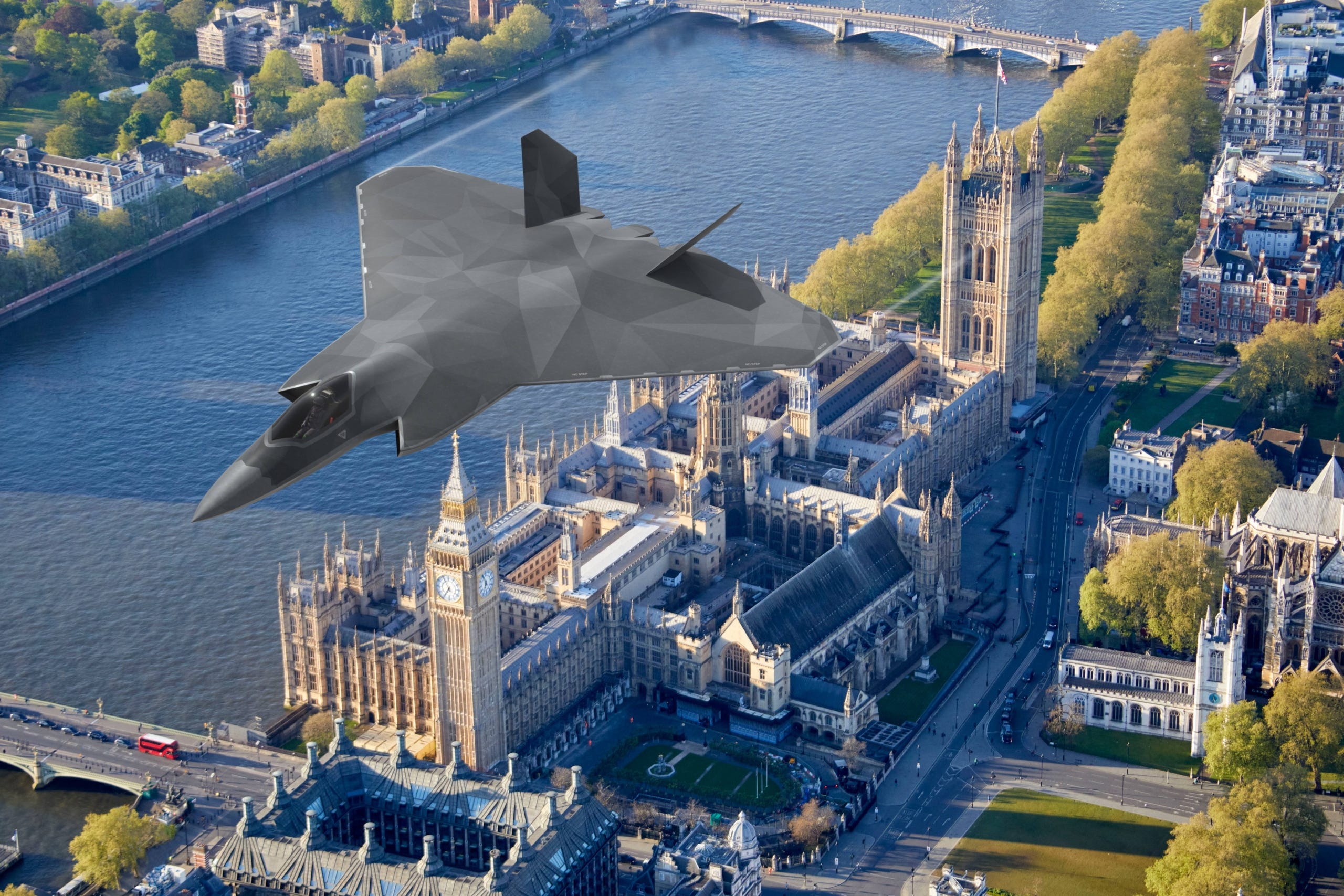
Over the past year the Treasury, Ministry of Defence and Downing Street have been locked in a three-way battle about how best to bolster national defence. But having talked the talk in last year’s Strategic Defence Review, with lots of ideas about what’s needed to get us to a ‘war footing’, they have had the greatest difficulty walking the walk, ie working out pay for it.
The problem was there from the outset, with the Treasury trying to avoid committing itself to anything more than a modest rise across a three year public spending horizon and it persists now, all these months later, as we await word of how much money is on its way. So, with one leak following another recently about the Defence Investment Plan, some suggesting it will be published before this week is out, those who deal with national security for a living are marvelling at the dysfunctionality of it all. With all this briefing going on we are certainly on a jaw jaw footing if not the war kind.
Nothing could better prove the emptiness of those phrases about a war footing than the bureaucratic fighting we’ve seen across Whitehall. It suggests that if anything it’s worse than business as usual, due to the parlous state of Britain’s public finances.
So what kind of announcement should we be looking for?
Timing: there’s been lots of set dressing about something coming on Thursday and some suggesting it will slip to Friday. But with leak and counter-leak still going on, demonstrating the participants are still fighting over the money, it may be that it will take longer and the real imperative will be getting it out before the Nato Sumit in Ankara in early July.
Name: is it going to be the Defence Investment Plan (DIP) or isn’t it? There still seems to be complete uncertainty about this in Whitehall. In the dreams of senior officers, the DIP was going to be a seamless design for what was needed, who would make it, how much it would cost, and how that spending would be structured over the coming years.
But a good deal of the leaking has implied that we will not get the DIP as such but a government commitment to boosting defence spending between now and the end of this Parliament (2030). What to call it then? When will the actual DIP with its elements of industrial strategy appear? Today’s situation bears a strong resemblance to one following the defence review of 2015 which was soon found unaffordable leading to various financial bandaids, a further quasi-review in 2018 and a feeling after years of fretting that the comprehensive solution had never been found. Perhaps it will be different now and we will actually get the Defence Investment Plan, Lord knows everyone has been working on it for long enough, but ultimately many will judge any announcement by the numbers in it.
How Much: whatever this new package is called people, particularly Westminster journalists, will be looking for the numbers. Many will measure it against the defence chiefs’ hopeful plea for another £28bn for defence between now and 2030. Today we are seeing figures of £13.5bn and £15bn being bandied about, so we can see expectations are being managed.
As so often with government announcements, political correspondents will get briefed in headline terms by spin doctors trying to avoid small print that might spoil the headlines. But I think we can guess in advance what those might be, depending on the partisan affiliation of those reporting it.
It will be critical to see whether the Treasury really binds itself to these increases up to 2030 or whether it sidesteps such commitments, which are precisely what the forces and manufacturers are looking for. Alas there are still plenty of people in government who hope that peace in Ukraine and Donald Trump leaving office might mean that our commitment to rearmament might be softened later on in this Parliament.
Whose Money: joy last year at the Strategic Defence Review’s spending promises was quickly tempered by the realisation that £6bn of the ‘extra’ cash was meant to come from ‘economies’ within the MoD and much of the rest from the Overseas Aid budget. Now it is reported that some other departments, including Health, have had their capital spending plans trimmed in order to pay for the new defence uplift.
This gives rise to many questions ranging from how much of the spending increase might have to come from cuts to whether it will be money committed to short term capital costs (like buying new munitions) rather than underwriting the long term resource or running costs of new defence capabilities.
Priorities: it’s another constant of British defence rows that we hear of ‘tough choices’ between the services and their preferred new weapons. If we hoped that his might become a thing of the past once the long decline in post-Cold War defence spending was reversed, we’ve learned to think again; the tendency of our armed forces to want more than they can afford continues.
So we face a situation where there will inevitably have to be trade-offs between the new nuclear system replacing Trident, plans to rebuild the surface fleet, the new GCAP fighter (pictured above) jet being developed jointly with Japan and Italy, and the ongoing rebuilding of the armoured fleet with Ajax and other vehicles. Each is a multi-billion, decades-long, business and given the issues in many of these projects further overspends are all but inevitable.
It helps that heavy spending on re-building the army is happening currently, whereas GCAP won’t peak for a few years but there are still many big challenges. Some of these will be dealt with by budgetary ‘moving to the right’, delaying the spend or stretching things out.
In my view we are likely to see the government commit itself to GCAP and move some of the ship building to the right. People are already talking about delays to the Type 26 frigate.
But it may also mean some cancellations, for example reducing the numbers of new warship classes or cancelling the new Type 83 destroyer altogether. It might also mean freezing some of the army’s vehicle projects.
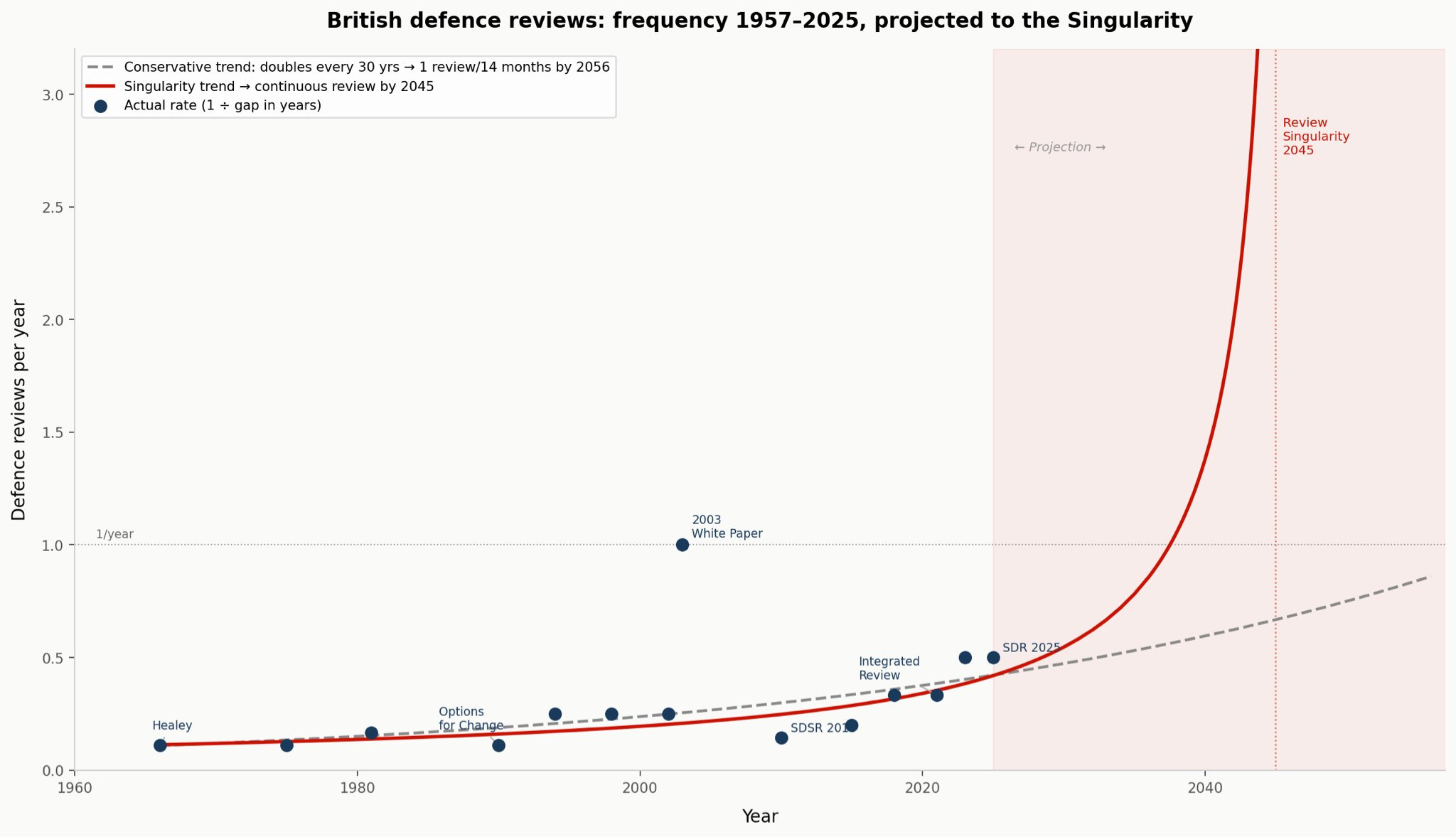
So much of what I’ve described here, of spending trickery, political mis-selling, mismanagement of defence projects or turf fights between the services is so wearily familiar that the promise of last year’s defence review, to reset the whole system, has been exposed as hollow. There is even some talk going around today of another review because last year’s will soon be out of date. As if to underline the absurdity, Shashank Joshi the Economist’s stellar outgoing defence editor posted the AI created (humorous) graph below – of a system so consumed by increasingly frequent exercises of this kind that it achieves a singularity, ending up doing nothing else. One can only guess what they make of this in Moscow or Beijing
.
Thank you for this sobering assessment. I wonder at what point does government simply decide that defence requirements drive the budget rather than the other way around? Reading this, I was reminded that in previous periods of rearmament Britain did not begin with an affordability envelope and then fit strategy inside it. Has Whitehall become so conditioned to peacetime Treasury discipline that it can no longer think in those terms?
All this will continue until a gutsy politician grabs the MoD and Treasury by the collar and get some answers. Failing to do so will end in catastrophic costs when we are dragged into a hot war. Pay now or pay much much more later.