

How Far Will He Go?
Despite Trump's language, Iran has so far out-escalated him

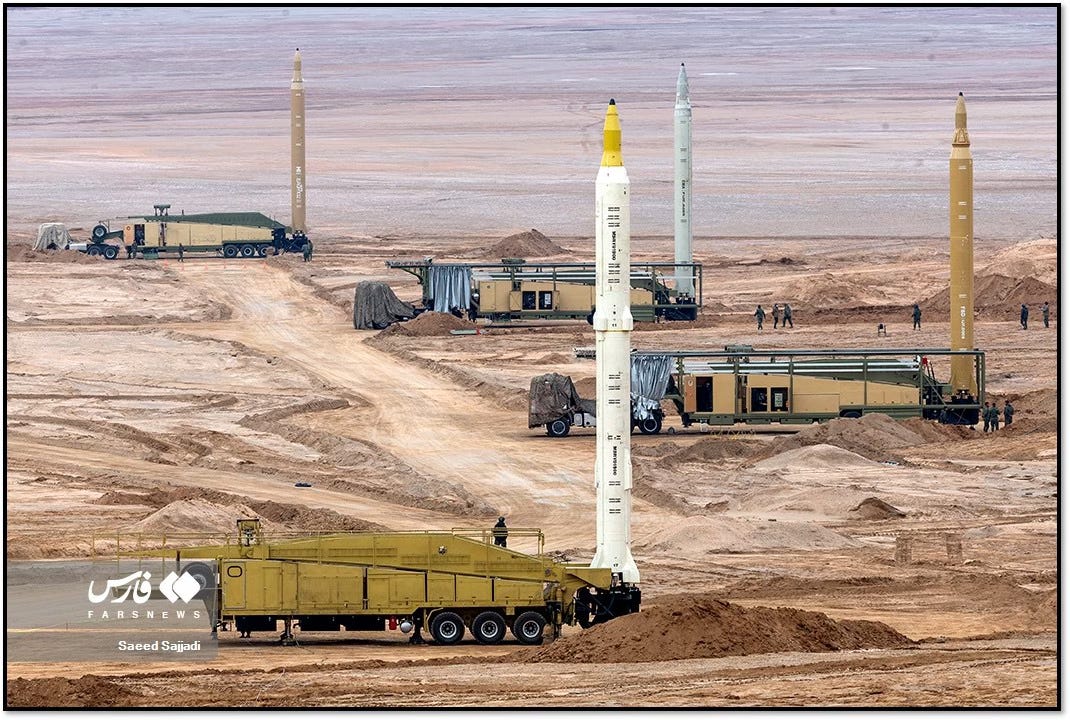
It’s too early to draw definitive conclusions about the Iran war, not least because of the apparently irreconcilable nature of the US and Islamic Republic negotiating positions. Certainly, though things are becoming a little clearer.
We are far enough along in this, firstly, to know that the US does not have the military forces in place to take control of the Strait of Hormuz or to develop large scale ground operations in Iran nor is there any prospect – in terms of units ordered to the region of them doing so.
The second thing that we know is that although the US and Israel have brandished the weapon of attacking the regime’s oil infrastructure, they have in fact held back from the wholesale destruction of its facilities at Kharg Island and elsewhere. This is logical enough given that the Trump Administration has been trying to limit the oil price shock, and taking 2m barrels per day of Iranian production out of the picture would only add to it, and that’s before even the promised retaliation against Gulf state oil infrastructure.
So, we are in a position where Donald Trump threatens escalation of various shocking kinds but cannot deliver it. Even so we have, since the bombing of the Pars gas field and Iranian retaliatory action against Qatar three and half weeks ago seen US and Israel trying to challenge the escalation dominance established back then by the regime.
It has been clear since the start that the Islamic Republic, engaged as it is in an existential battle, has been willing to use methods and suffer pain that Trump, launching an ill-considered war of choice, is not. That limits American options, less so those of Israel, with far more at stake, hence the possibility of tensions between them.
Since the abortive strike on the Pars gas field, these attempts to create greater pain for the Islamic Republic, while remaining within Trump’s limits, have seen multiple hits on Iranian infrastructure. Their steel mills have been targeted, as have chemical plants, railways, and some research institutes at universities.
The first thing to note, is that while these haven’t changed the war in any fundamental way, we cannot say conclusively that they failed either. It is evident that Iran has not been able to mete out the wholesale regional destruction it threatened if such targets were hit. That’s partly because of its own military limitations and may also reflect a nervousness on the part of some in the Iranian leadership.
After all, if regime survival is the core goal, they cannot remain indifferent to massive economic damage at home. The regime will blame their attackers, but that will only go so far with a restive population used to such messages. Taxing traffic in the Strait of Hormuz helps them pay for rebuilding, but none of that will happen overnight.
And just as the last weeks have exposed certain self-imposed American limitations, so we can see that Iran may also have sought certain types of de-escalation, despite its own threatening language. For week it shunned peace moves. but lately it has allowed (a few) more ships through the Strait, freed some foreign hostages and of course indulged Pakistani and other foreign mediators.
Yes, the Islamic Republic seeks through these negotiations to codify certain advantages it has gained but it would also like the destruction of its economic infrastructure to stop. If the current negotiations falter, and a full-scale exchange resumes, can the US and Israel raise the pain level?
Inevitably many in Europe balk at such tactics and point to the law of armed conflict. But infrastructure can be deemed part of Iran’s war-making potential from the mills rolling steel for missile launchers to the chemical plants making ‘energetics’ ie explosive or rocket fuel, or the bridges used by missile launchers as they deploy.
This was very well understood by western countries in the past. And we do not have to reach back to the Allied bomber offensives in the1940s, burning German or Japanese cities, in a way that many deemed morally unacceptable even at the time, to see this.
Consider Nato’s Operation Allied Force against Serbia and its forces in Kosovo back in 1999.
During that war, enthusiastically prosecuted by the UK and other European allies as well as the US and despite the absence of an enabling United Nations resolution, bridges were bombed, power stations put out of action, as was the TV station in Belgrade, and some prized examples of Yugoslav industry such as the Zastava car plant. These places were all signed off by the lawyers in Nato HQ as part of Yugoslavia’s war-making potential, and the outcome was successful coercion: Slobodan Milosevic agreed to withdraw his forces from Kosovo.
You might say it was ugly and cynical but if war is a battle of wills, states waging it must ultimately be willing to threaten the things their opponent holds dear. Western countries, after decades of ‘discretionary’ operations in Iraq and Afghanistan have perhaps forgotten that.
There are many differences between Operation Allied Force and today’s situation. The desire of some European leaders to see Trump get his comeuppance, and their amnesia about the legal pliability their predecessors were prepared to engage in over a war they felt a stake in, were all factors.
Critically though, Iran is a state with the will and capability to behave in quite a different way to Milosevic’s Yugoslavia, holding others to ransom. That can be the innocent foreign passport holders arrested on fabricated charges while travelling through their country, and it can be whole nations, their Gulf neighbours for example.
Iran attacked Dubai’s airport on the first day of the war and had hit Qatar’s key gas terminal as well as Saudi Arabia’s oil one within 72 hours of this starting. Having been struck by Israel and US, they demonstrated immediately a readiness to burn the whole region and never mind those Gulf emirs who had been trying to negotiate a peaceful outcome or stopped America using their bases to carry out attacks.
All of this happened before Trump or Netanyahu had hit Iranian infrastructure. It was only the Gulf states’ big investment in air defences that stopped it from being far more destructive at the get go.
Are there limits to Iran’s ruthlessness? Perhaps even the Islamic Republic recognises that wholesale strikes on desalination plants (there have been some, but to limited effect) in its Gulf neighbours would cross a line, potentially damaging them in the eyes of the Muslim world.
Engaged in an existential fight of its own, the Israelis have also been prepared to escalate beyond limits acceptable to most western countries. It was confidently asserted by many experts that Hamas would never handover the last Israeli hostages until their military had withdrawn from Gaza but that happened. Similarly, many Lebanese told me in September 2024 that Hezbollah would not stop firing rockets at Israel unless there was also peace in Gaza but it did after the battering it received.
If all of this caused widespread revulsion in democratic societies and a war crimes indictment from the International Criminal Court, that didn’t matter to Netanyahu as long as it worked, and Israelis could believe in a narrative of victory. But now in starting this battle with Iran, he may, as I wrote last week, have turned a war of choice into an existential one.
Whether or not you blame the Israeli PM for talking him into it (I prefer to think of POTUS as someone who makes his own mind up), Trump will certainly decide how the US is going to get out of this. If there is any positive, I hope it educates him and his successors in the dangers of picking such a fight unless vital national interests are really at stake. But I fear the negatives – that roiling instability will continue in the Middle East, and America’s enemies more broadly will have drawn conclusions, rightly or wrongly, about the USA’s political and military limitations.
Today’s NYT has an excellent account of how Netanyahu talked Trump into this war. You seem remarkably indulgent of a dwarf state which wants to wage war in every direction and which has no concern for anyone else.
A good and balanced assessment. The wider analysis so far today and yesterday has been mostly hyperbolic, sometimes hilariously so. From here, a lot will depend on the details that get implemented from the "ceasefire". I suspect a period of 2 weeks or so of relative calm will make it clearer just how badly Iran has been damaged.