

Another new Prime Minister?!
Wake me up when someone gets real

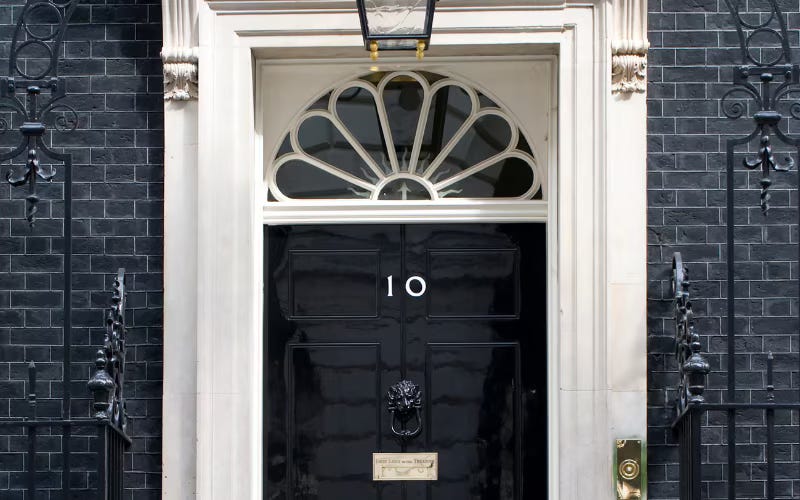
I’m going to be honest about this, Britain’s political crisis of the last few days arouses only a glimmer of interest in me. Until we get a leader and government prepared to confront the country’s big underlying problems, I think that the Westminster battle will only be relevant at the margins.
This is not to say that the current manoeuvring by those trying to topple Keir Starmer is not entertaining. It has power as a political drama, not least because scheming leadership contenders or their friends who constantly brief the press have not yet (writing on Wednesday afternoon) had the backbone to confront Starmer openly.
And it’s true also, that while I can be critical of the way politics is reported in this country and often occupies too big a place in the news agenda, what’s going on now is certainly ‘a big story’. The people have spoken in recent local elections, it’s an inflection point in terms of our democracy, exposing many big questions, not least what Labour is for now and how two legacy parties that have dominated political life for decades deal with the Reform and Green insurgencies.
But what leaves me cold is the reluctance of politicians to confront those big underlying questions about what our government can and cannot achieve. I don’t think the current Labour leadership ructions will produce a prime minister who is any more willing to do that.
And in the absence of such discussion, the gap between what the country wants and what it is willing to pay for is filled by ever more debt, the servicing of which now consumes more taxpayers’ money (£111bn in 2025-26 or 8.3% of government spending) than defence and education combined.
The popularity of Reform and the Greens suggests, if anything, an even greater retreat from reality, with a drift towards magical thinking in a ‘sod the bond markets’ sort of way. This, and the current uncertainty in Downing Street are making it harder for the British state to finance its debt, nudging up the reward (ie the interest rate) needed to attract buyers of government bonds to its highest level in nearly 30 years.
So given that it’s King’s Speech day, when the party in power sets out its programme for the coming months, here are some suggested alternatives.
- End the triple lock on pensions. As a financially comfortable 65 year old, that means I’ll take a hit, but that’s OK if it’s an investment in the future, by which I mean education, infrastructure or defence.
- Comprehensive welfare reform, curbing the unsustainable growth in benefits such as Personal Independence Payments and reducing the entitlements of those who’ve just arrived in the country.
- A Royal Commission on the future of the NHS, safeguarding the principle that it should be free at the point of delivery but re-examining all other aspects of it in terms of delivering better outcomes and cutting bureaucracy.
- A specific tax or insurance scheme for social care, to remove this burden from the NHS.
- A commitment to get defence spending to 3% of gross domestic product by 2030, 5% by 2035, with legally binding spending increases in each year along that pathway until the end of this Parliament.
I could go on – but I expect you will be relieved that I haven’t! My point is that we must fix the fundamental problems in the public finances as we go on to the other really big questions, even the existential ones, such as finding the right approach to Artificial Intelligence or climate change.
Instead we have a political class that believes that tackling these issues is too electorally risky and media commentary that makes this a self-fulfilling prophecy. And yes, I can see that grasping these issues means people like me will pay more tax, and squeeze those who may be struggling on benefits. A formula of ‘equal misery’ might seem an obvious electoral liability - but Lord we need someone who can articulate it in terms of a time limited commitment to turn the country around, requiring commitment from all rather than the ‘soak the rich’ or ‘hit the benefits cheats’ options of class-based politics.
Instead, each of us will have our own milestones in thinking ‘this is no longer a serious country’. I would cite: the failure to have a proper conversation about the cost of social care, derided as a ‘dementia tax’ when Theresa May attempted it; the refusal of all parties to drop the triple lock on pensions; Keir Starmer’s u-turn on benefit reform; and the failure of both the Sunak and Starmer governments to fund defence adequately at a time when they have adopted the rhetoric of putting the country on a war footing.
Our politicians and commentators have fallen into a consensus that creates an ever-smaller Overton Window about what policies are ‘politically acceptable’. That means avoiding certain issues, which in turn drives a disaffection from politics, a drift to extremes and draws us step by step closer to a financial crisis. So unless a Burnham, Miliband or Streeting has a substantially different approach to leadership, I cannot see that we will get anything more than a different brand of sticking plaster for a broken system.
Oh and while you are at it - fix the roads!
The UK must rejoin the EU to be 'at the heart of Europe.Starmer (and his would be successors) know this but remain frightened of speaking the truth to the people. Unfortunately, that is an essential ingredient of good leadership and- until they accept this pre-requisite - they will continue to speak in clichés , using language (as Orwell wrote) to create a miasma akin ti 'the blind leading the blind'.